Patient advocacy groups, including organizations like the American Cancer Society and the European Initiative for Health Equity Now, play a vital role in healthcare, representing patients’ interests and promoting patient-centered care across the healthcare system. These organizations ensure that patients’ needs and concerns are integrated into healthcare decisions and policies by providing crucial information, raising awareness, and advocating for better health outcomes.
Originating from grassroots movements in the 1950s, patient advocacy groups, such as the National Health Council and PatientView, have significantly influenced healthcare by fostering patient-centered practices and addressing health disparities. They encompass two main types:
- Disease-specific organizations, such as those focused on cancer screening and cancer survivors, which focus on conditions like cancer or diabetes,
- General advocacy groups, which tackle broader healthcare issues including equitable health and insurance discrimination.
Despite challenges such as limited funding, financial discrimination, and political pressure, these groups provide essential support and resources, enhancing healthcare experiences for patients. Engaging with patient advocacy groups through volunteering or participation strengthens community support networks and fosters long-term relationships with patients and families.
As healthcare priorities shift, patient advocacy groups are set to increase their influence in policy-making and patient rights, leveraging technology and innovation to improve healthcare outcomes and community engagement.
Key Takeaways:
What are Patient Advocacy Groups?

Patient advocacy groups are organizations that represent patients’ interests and promote patient-centered care within the healthcare system.
Patient advocacy groups work to ensure that patients’ needs and concerns are considered in healthcare decisions and policies.
These groups support patients by providing information, raising awareness, and advocating for better health outcomes and policies.
Definition and Purpose
Patient advocacy involves supporting individuals in the healthcare system by ensuring their rights, such as the right to be forgotten, and improving health outcomes.
Patient advocacy focuses on helping patients make informed decisions, facilitating communication with healthcare providers, and ensuring access to necessary treatments.
Organizations work to promote fair healthcare policies.
History of Patient Advocacy Groups
The history of patient advocacy groups began in the 1950s with grassroots movements focused on patient rights, including groups dealing with rare diseases and chronic illnesses.
Patient advocacy groups gained influence by the 1970s, working with healthcare providers and policymakers.
Scientific advancements and these advocacy efforts improved treatment options and raised disease awareness, particularly in areas like Duchenne muscular dystrophy and cancer.
Patient advocacy groups address health disparities, notably with cancer and rare diseases.
Evolution and Impact on Healthcare
The evolution of patient advocacy groups in healthcare has transformed care by promoting patient-centered practices and improving healthcare outcomes.
Patient advocacy groups impact healthcare through policy influence, legislative advocacy, and diminishing health disparities.
These groups enable patients by educating them and encouraging involvement in healthcare decision making and patient engagement.
Collaboration with healthcare providers and policy-makers ensures that patient advocacy groups shape inclusive healthcare policies.
Types of Patient Advocacy Groups
Patient advocacy groups are categorized into disease-specific organizations and general advocacy organizations.
Disease-specific organizations focus on particular conditions, providing support and resources tailored to their communities.
General advocacy organizations address broader healthcare issues, influencing policies and promoting equitable health for all patients.
Both types play essential roles in improving patient engagement and health outcomes.
Disease-Specific vs. General Advocacy Groups

Disease-specific advocacy groups focus on individual conditions such as cancer or diabetes, conducting targeted research funding and awareness campaigns.
General advocacy groups address broad healthcare issues affecting multiple patient populations, tackling challenges like health disparities, policy initiatives, and systemic barriers.
Disease-specific groups often rely on pharmaceutical partnerships for funding, whereas general groups seek grassroots donations and grants.
Benefits of Patient Advocacy Groups
Patient advocacy groups offer support, resources, and information for navigating the healthcare system.
Advocacy groups enable patients by connecting them with treatment options, emotional support, and resources like medical history guidance.
These groups assist in healthcare decision-making, improving patient outcomes by clarifying medical options.
Community engagement by advocacy groups promotes patient-centered care and improves health outcomes.
Support and Resources for Patients
Patient advocacy groups provide patients with support and resources including emotional support, educational materials, and healthcare decision-making guidance.
These groups connect patients with support networks, offer information on treatment options, and assist in understanding medical history.
Patient advocacy groups enhance the healthcare experience by enableing patients and promoting understanding.
Challenges Faced by Patient Advocacy Groups
Patient advocacy groups face challenges such as limited funding, political pressure, financial discrimination, and maintaining impartiality.
These obstacles impact their ability to address insurance discrimination and health disparities.
Resources and expertise are often insufficient, complicating their navigation of the healthcare system.
Funding and Influence
Funding and influence are key factors affecting patient advocacy groups’ ability to advocate for patients’ rights.
Funding from foundations, donors, or sponsors provides resources for research, public education, and policy influence.
Increased funding leads to greater advocacy impact, improving health outcomes and access to equitable healthcare.
Limited funding restricts advocacy efforts, highlighting the importance of financial resources in patient advocacy.
How to Get Involved with Patient Advocacy Groups

To get involved with patient advocacy groups, such as those in Birmingham, Washington D.C., and Durham, NC, join as a volunteer, attend events, and participate in fundraising efforts.
Patient advocacy involvement includes raising awareness of health issues, supporting patients, and promoting access to care.
Engagement with advocacy groups strengthens community support networks and fosters relationships with patients and families.
Ways to Volunteer and Support
Volunteering and supporting patient advocacy groups can be done by assisting with education, organizing awareness campaigns, and planning fundraising events.
Volunteers engage in community outreach and provide direct support to patients, improving healthcare awareness and enablement.
The Future of Patient Advocacy Groups
The future of patient advocacy groups, including organizations like Genentech, Roche, and ISPOR, involves increased influence in healthcare policy and patient rights due to shifts in healthcare priorities.
Patient advocacy groups will integrate technology and scientific innovation to improve healthcare outcomes and community engagement.
These groups will focus on areas like cancer treatment and rare diseases, reflecting evolving healthcare landscapes.
Impact on Healthcare and Potential Growth
Patient advocacy groups impact healthcare by improving health outcomes and raising awareness about patient issues.
These groups represent individuals with chronic illnesses and rare diseases by lobbying for better treatments and funding.
Patient advocacy groups connect patients, healthcare providers, and policymakers to make education and resources accessible.
Their efforts enhance healthcare systems and improve patient experiences through collaborative initiatives.
Frequently Asked Questions
What are patient advocacy groups and why are they important?
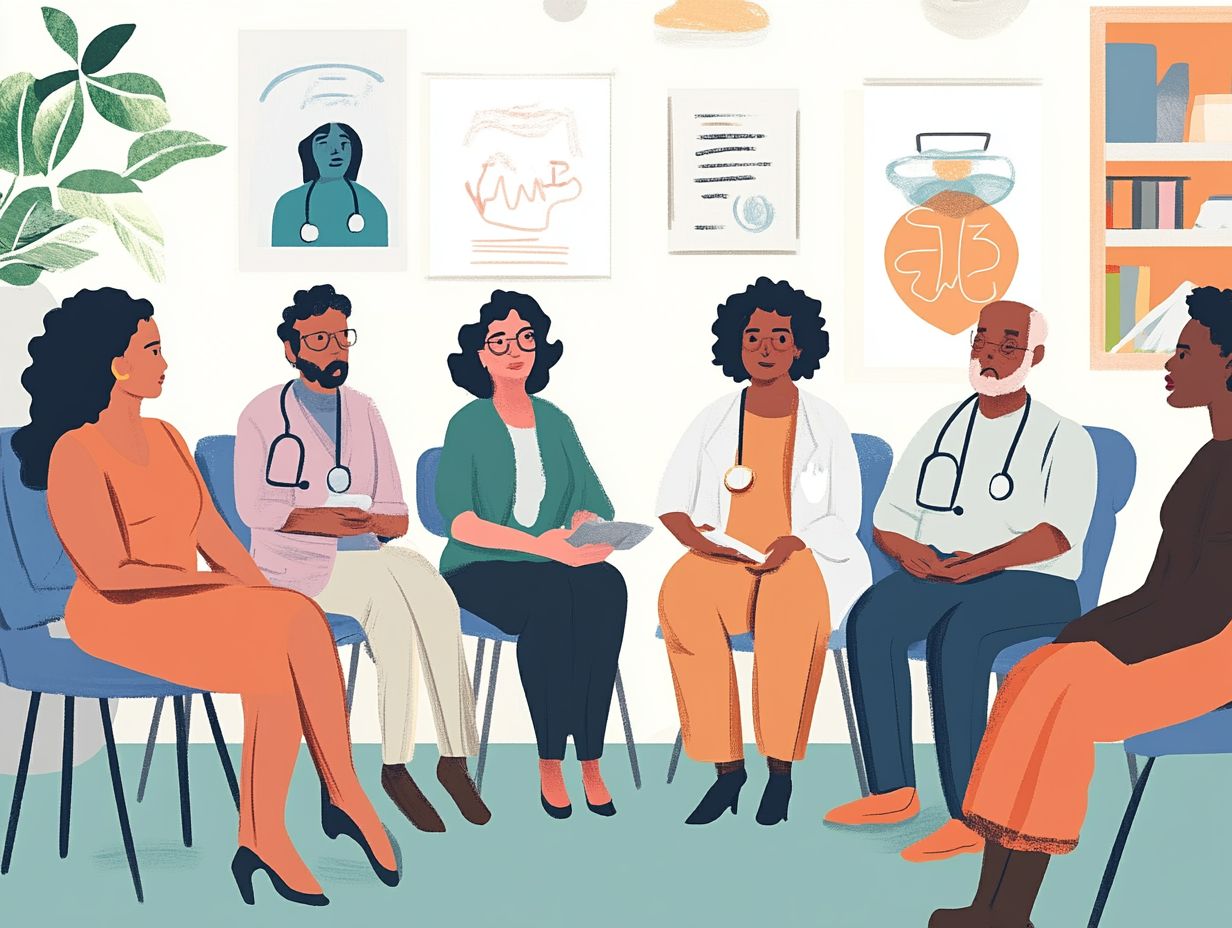
Patient advocacy groups are organizations that work to improve the lives of patients by advocating for their rights and needs. They play a crucial role in the healthcare system by providing support, education, and resources to patients and their families. They also work to raise awareness about specific diseases or conditions and advocate for policies that benefit patients.
How do patient advocacy groups support patients and their families?
Patient advocacy groups offer a wide range of support services, including emotional support, educational resources, and financial assistance. They also provide a platform for patients and their families to connect with others who are going through a similar experience, which can be incredibly valuable in coping with a diagnosis or managing a chronic illness.
What types of advocacy work do patient advocacy groups engage in?
Patient advocacy groups may engage in a variety of advocacy work, such as lobbying for policy changes, raising awareness through public campaigns, and providing guidance and support for patients navigating the healthcare system. They may also collaborate with healthcare providers and other organizations to improve access to quality care for patients.
How can patients and their families get involved with patient advocacy groups?
Patients and their families can get involved with patient advocacy groups by becoming members, volunteering, or sharing their personal experiences to help raise awareness. These advocacy organizations often collaborate with entities like Genentech and PatientView to empower cancer survivors and those with rare diseases through various initiatives. Many groups also offer opportunities for patients to participate in research studies or clinical trials, which can advance medical knowledge and lead to better treatments for patients, such as those being developed by the American Cancer Society and the European Initiative.
Are patient advocacy groups only focused on specific diseases or conditions like Duchenne muscular dystrophy or cancer?
No, patient advocacy groups can focus on a wide range of health issues and may also advocate for broader healthcare policies that impact all patients, addressing concerns such as insurance discrimination and equitable health. Some groups may focus on a specific disease or condition, like the American Diabetes Association dealing with diabetes, while others may focus on improving healthcare for a particular population, such as children or seniors, by addressing health disparities and advocating for health equity now.
How can healthcare professionals work with patient advocacy groups to improve health outcomes?
Healthcare professionals can work with patient advocacy groups by collaborating on projects, sharing resources and information, and supporting their advocacy efforts. This collaboration often involves patient engagement and can address health outcomes by offering emotional support, treatment options, and involvement in policy initiatives. They can also refer patients to these groups, such as the National Health Council or Rare Patient Voice, for additional support and resources. By working together, healthcare professionals and patient advocacy groups can improve the overall quality of care for patients by fostering patient-centered care and engaging in healthcare decision making that considers a patient’s full medical history.