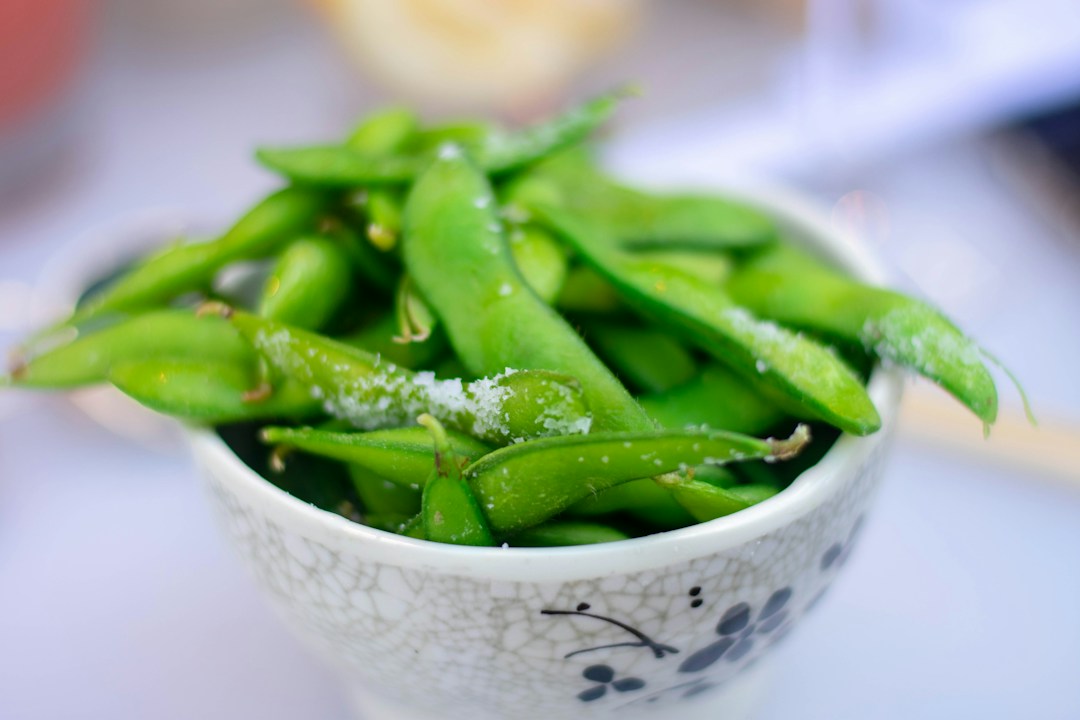
Short answer: Current human evidence does not support a blanket recommendation to avoid ordinary soy foods after breast cancer, including solely because the cancer is estrogen-receptor-positive (ER-positive). Tofu, edamame, tempeh, miso and soy milk are different from concentrated soy-isoflavone pills or extracts. The American Cancer Society says eating soy foods does not appear to increase recurrence risk, while evidence about supplements remains less clear. Your own care team can advise on questions specific to your diagnosis and treatment.
A cancer diagnosis can make even familiar meals feel uncertain. When you hear that soy contains “phytoestrogens,” it is understandable to wonder whether something you’ve eaten for years could affect a hormone-sensitive cancer. To evaluate that concern, we need to look beyond a single word or headline and ask what was studied, in whom, and what was actually measured.
Why does soy raise concern after breast cancer?
Soybeans contain natural plant compounds called isoflavones. They are often described as phytoestrogens because they can interact with estrogen receptors. But describing a compound as estrogen-like does not mean eating soy behaves in the body in exactly the same way as the body’s estrogen. Dose, metabolism, the form consumed and the outcome measured all matter.
Some earlier concern came from laboratory and animal studies using particular exposures. The American Cancer Society notes that animals process isoflavones differently from humans and that some studies used doses higher than typical food consumption. That is a reason to look carefully at human studies—not to dismiss laboratory research, but not to assume it predicts a patient’s recurrence risk either.
What did research following women after breast cancer find?
In the Shanghai Breast Cancer Survival Study, researchers recruited 5,042 women and analyzed outcomes among 5,033 surgically treated patients. Over a median 3.9 years of follow-up, greater soy food intake was associated with lower total mortality and recurrence. The multivariable-adjusted four-year recurrence rates were 11.2% in the lowest soy-protein-intake group and 8.0% in the highest; adjusted mortality rates were 10.3% and 7.4%, respectively.
These numbers describe differences observed between groups. They do not mean soy prevented recurrence, nor do they establish that someone can reproduce those percentages by changing what they eat. Observational research can account for many measured factors but cannot eliminate every possible difference between the people being compared.
The study reported an inverse association in women with ER-positive and ER-negative disease and in both tamoxifen users and nonusers. That is particularly relevant to the concern that ordinary soy foods must automatically be avoided during hormone-sensitive breast cancer care, although it does not settle every individual treatment or supplement question. Read the Shanghai study (Shu et al., JAMA, 2009).
What does the broader research add?
A systematic review and meta-analysis published in 2024 included 32 articles assessing several dietary phytonutrients after breast cancer, including soy-related exposures. In the pooled observational findings, higher soy-isoflavone intake was associated with a 26% lower risk of recurrence (hazard ratio 0.74; 95% confidence interval 0.60–0.92). Associations were also reported in subgroups including ER-positive survivors.
It is important to read that carefully: this review did not contain 32 soy-only randomized treatment trials, and it could not establish that starting soy after diagnosis will improve outcomes. The authors noted uncertainty about the effects of newly introducing or substantially increasing these exposures after diagnosis. Read the systematic review and meta-analysis.
One practical interpretation is that the available human evidence does not justify treating normal soy food consumption as an established recurrence risk. It is not a reason to prescribe soy as a cancer treatment or replace recommended treatment with dietary changes.
What about ER-positive breast cancer and tamoxifen?
With ER-positive disease, questions about anything described as estrogen-like are particularly understandable. The Shanghai data did not suggest that dietary soy negated the observed benefit of tamoxifen; nevertheless, that observational finding is not a personalized drug-interaction assessment.
The American Cancer Society currently states that eating soy foods does not seem to pose a risk of breast cancer recurrence, while the evidence about taking soy or isoflavone supplements is unclear. If you take endocrine therapy, have additional medical conditions or are considering an extract, bring those details to your oncology team rather than making a decision based on a general internet recommendation. See the American Cancer Society’s survivorship guidance.
Then why did a presurgical soy study raise concerns?
In a randomized study reported by Shike and colleagues, 140 women with early-stage breast cancer were assigned soy-protein supplementation or placebo for approximately 7–30 days before surgery. Researchers examined molecular changes in tumor samples. They found a gene-expression signature in a subset that raised questions about the effects of supplementation, but the study did not find a statistically significant overall change in Ki-67 (a proliferation marker) or Cas3 (an apoptosis marker).
Crucially, this was a short-term biological study, not a study of whether traditional soy foods changed long-term recurrence or survival. Its findings warrant scientific attention, but they should not be presented as proof that tofu or edamame causes breast cancer to return. Read Shike et al. (2014).
When headlines appear to conflict, compare their questions: a molecular signal after a short intervention is not the same endpoint as recurrence observed during years of follow-up. Both types of study can contribute information, but they answer different questions.
Soy foods and concentrated supplements are different questions
Traditional soy foods include tofu, tempeh, edamame, miso and soy milk. They can provide protein and other nutrients as part of an overall eating pattern. Concentrated supplements, including isolated isoflavone pills or extracts, can deliver different exposures; findings about food cannot be transferred automatically to them.
The American Cancer Society advises discussing any soy or isoflavone supplement with the healthcare team, particularly because evidence about these products is less clear. More generally, supplements should be reviewed alongside current treatments and medications. For broader reading, see our article on supplements for people with cancer and the American Cancer Society’s soy explainer.
What should you do with this information?
You do not need to interpret every study on your own before eating lunch. But if you’re changing your diet, using supplements or struggling to eat well during treatment, ask for guidance relevant to your situation. An oncology dietitian can also help when symptoms, appetite or nutritional needs make food choices harder. For additional context, read about important nutritional needs during cancer.
One question worth asking: “Given my breast cancer diagnosis and current treatment, is there any reason I need to avoid ordinary soy foods, and should I stay away from concentrated soy supplements?”
If you’ve heard conflicting recommendations, you can add: “Was the information based on studies of foods, supplements, laboratory findings or actual patient outcomes?” For help preparing the rest of your appointment, see questions to ask your doctor.
Key research and guidance
- Shu et al., 2009 — observational study of soy food intake and breast cancer survival.
- Systematic review and meta-analysis, 2024 — observational evidence on multiple phytonutrients and outcomes after breast cancer.
- Shike et al., 2014 — short-term randomized presurgical soy-supplementation and tumor biology study.
- American Cancer Society: reducing risk of breast cancer returning or progressing — interpretation of food versus supplement evidence.
The bigger question: does this information apply to you?
The soy debate is one example of a challenge that comes up throughout cancer care: a headline or study may be interesting, but how does it relate to your cancer biology, test results, treatment and priorities?
Together4Cancer® Beacon helps you organize your cancer information, concerns and personal priorities, and prepare treatment and testing questions to discuss with your care team before the next decision. It is an educational decision-readiness tool, not a source of individualized nutrition clearance or treatment recommendations.
Prefer watching the explanation?
Watch our companion video, What Nobody Tells You About Soy for Breast Cancer.
Educational information only. This article does not provide diagnosis, individualized medical advice or treatment recommendations. AI can make mistakes. Discuss decisions with your qualified care team. Do not delay urgent care.