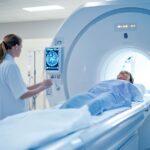
Artificial Intelligence (AI) is revolutionizing cancer care by enhancing cancer diagnostics, treatment planning, and patient monitoring. With its ability to analyze complex clinical data and tumor biology, AI improves diagnostic accuracy, identifies tumor patterns, and personalizes treatment plans based on individual patient profiles.
Through applications like machine learning and deep learning, AI assists healthcare providers in making data-driven decisions, optimizing treatment protocols, and predicting treatment responses. AI technology enhances predictive analytics, improving patient outcomes and healthcare delivery.
AI’s role in early cancer detection and personalized oncology is significant, offering tools like IBM Watson for Oncology that aid in evidence-based treatment choices.
However, challenges like data quality, integration issues, and ethical considerations must be addressed to maximize AI’s potential in oncology.
Looking to the future, AI promises to make cancer care more efficient, improving patient outcomes and streamlining processes from diagnosis to treatment. As AI continues to develop, its integration into cancer care will be pivotal in advancing precision oncology and overcoming current healthcare barriers.
Key Takeaways:
Understanding Cancer and Its Treatment

Cancer is a disease characterized by uncontrolled cell growth in the body.
Cancer treatment includes surgery, radiation therapy, chemotherapy, immunotherapy, checkpoint inhibitors, and targeted treatments based on tumor biology and molecular data.
Understanding cancer involves studying specific cancer types and their biological mechanisms to develop effective treatments.
The Potential of Artificial Intelligence in Cancer Care
Artificial Intelligence (AI) in cancer care improves diagnostics by using machine learning to analyze clinical data and identify tumor patterns.
AI enhances cancer treatment by predicting patient outcomes and personalizing treatment plans.
AI helps reduce health disparities by providing accurate cancer diagnostics across diverse populations and integrating epidemiological data.
Applications of AI in Cancer Care
AI in cancer care includes applications in diagnosis, treatment planning, and monitoring. AI enhances cancer screening accuracy and supports personalized treatment decisions by analyzing patient data.
AI transforms cancer diagnostics by improving detection rates and optimizing patient management strategies.
Diagnosis and Early Detection
AI algorithms enhance cancer diagnosis and early detection by analyzing medical imaging and clinical data to identify cancer patterns.
AI tools like DeepMind’s algorithms interpret mammograms with high accuracy, aiding in breast cancer detection.
AI integration in MRI and CT scans improves assessments, leading to earlier interventions and better patient outcomes.
Treatment Planning and Personalization

AI in oncology treatment planning enables personalized treatment by utilizing clinical data to tailor therapies to individual patients.
AI-driven precision oncology focuses on optimizing treatment decisions based on patient profiles and tumor characteristics.
AI tools analyze genetic information, treatment histories, and biomarkers to create individualized strategies that improve outcomes and minimize adverse effects.
Examples of AI tools include systems like IBM Watson for Oncology, which support clinicians in making evidence-based treatment choices.
Monitoring and Predicting Treatment Response
AI monitors and predicts treatment responses in cancer patients by analyzing tumor biology and clinical trial data to inform therapy adjustments.
AI uses real-time data to assess patient conditions, providing insights into treatment efficacy and enabling personalized healthcare strategies.
AI enhances treatment precision, reduces trial timelines, and improves quality of life for cancer patients through adaptive clinical assessments.
Challenges and Limitations of AI in Cancer Care
Challenges and limitations of AI in cancer care include data quality issues, integration difficulties, and ethical concerns.
AI deployment in cancer care faces obstacles like inconsistent data collection, which impairs algorithm accuracy.
Health disparities and ethical concerns limit AI’s equitable application in oncology.
Data Collection and Integration
Data collection and integration ensure accurate health records for AI in cancer care.
Effective data governance facilitates seamless integration from clinical data sources, improving AI’s role in patient outcomes.
Robust data governance ensures data quality, consistency, privacy, and regulatory compliance.
Streamlined data processes in cancer care lead to personalized treatments and enhanced patient engagement.
Ethical Considerations

Ethical considerations in AI for cancer care involve addressing health disparities, ensuring transparent use of patient data, and avoiding biases in AI algorithms.
AI systems in cancer care must follow strict transparency and accountability standards to prevent reinforcing healthcare biases and ensure data quality.
Responsible AI development ensures equitable access to cancer treatment and addresses the unique needs of underrepresented groups.
Future of AI in Cancer Care
The future of AI in cancer care involves improving diagnosis accuracy, personalizing treatment plans, and predicting patient outcomes.
AI technology will help identify cancer earlier through advanced imaging and data analysis, leading to better treatment options.
AI will also optimize drug development by predicting how patients will respond to new therapies.
AI applications will make cancer care more efficient and improve patient outcomes.
Potential Impact and Continued Development
The potential impact of AI on cancer research includes improved patient outcomes through enhanced precision oncology and clinical trials.
AI applications streamline data analysis, identify clinical trial candidates, and enable real-time patient monitoring.
AI facilitates personalized cancer treatment by tailoring therapies to individual patient profiles using predictive analytics and risk factors.
AI continues to develop, playing a crucial role in overcoming barriers, enhancing AI capabilities, and advancing precision oncology.
AI Tools and Technology in Cancer Care
AI tools in cancer care use machine learning and deep learning to enable predictive modeling and clinical data analysis.
These technologies, including deep learning models, help healthcare providers make data-driven decisions, improve patient care, and optimize treatment protocols.
AI tools like IBM Watson for Oncology predict treatment responses and suggest personalized therapies based on tumor genetics.
AI integration with electronic health records aids oncologists in identifying trends and patterns for early intervention and tailored care.
Frequently Asked Questions

What is the role of Artificial Intelligence in Cancer Care?
The role of Artificial Intelligence (AI) in Cancer Care is to assist healthcare professionals in making accurate and timely decisions in the diagnosis, treatment, and management of cancer, including AI applications in cancer surveillance and personalized treatment strategies.
How does AI help in cancer diagnosis?
AI helps in cancer diagnosis by analyzing large amounts of medical data, such as patient records, medical imaging scans, and genetic information. It can detect patterns and abnormalities that may be missed by human doctors, enabling earlier and more accurate diagnosis.
Can AI predict the risk of developing cancer?
Yes, AI algorithms can analyze a person’s medical history, lifestyle factors, and genetic data to predict their risk of developing cancer. This can help in developing personalized prevention, early detection strategies, and understanding cancer types.
What role does AI play in cancer treatment?
AI can assist in developing personalized treatment plans by analyzing a patient’s genetic data, medical history, and tumor features. It can also help in predicting how a patient will respond to different treatment options, optimizing their chances of success and addressing immunotherapy response.
Is AI used in monitoring cancer progression?
Yes, AI can continuously analyze data from various sources, such as imaging scans, biomarker levels, and clinical trials, to monitor the progression of cancer. This can help in detecting any changes or recurrences early on, allowing for prompt intervention.
Can AI improve the overall quality of cancer care?
Yes, by streamlining processes and reducing the chances of human error, AI can improve the overall quality of cancer care. It can also help in reducing healthcare costs, enhancing physician decision-making, and increasing access to high-quality care for patients.