Group therapy plays a vital role in the treatment and emotional support of cancer patients. It provides a nurturing environment where individuals can share experiences, learn coping strategies, and build meaningful connections. This therapeutic approach addresses crucial aspects of mental health such as anxiety, depression, and isolation, ultimately enhancing the quality of life for cancer patients. Group therapy also helps in managing practical problems and relationship changes that often accompany a cancer diagnosis.
The benefits of group therapy include:
- Emotional support
- The development of coping mechanisms
- Improved communication
- Strengthened social connections
- Addressing family concerns
- Enhancing self-esteem
- Emotional support
- The development of coping mechanisms
- Improved communication
- Strengthened social connections
Different types of group therapy, such as support groups, psychoeducational groups, and cognitive-behavioral therapy groups, cater to various needs, offering both shared experiences and structured professional guidance.
To join a group therapy program, cancer patients can explore resources like CancerCare and the American Cancer Society, consider their personal needs and preferences, and assess factors such as group size, facilitator qualifications, logistical details, and health insurance coverage.
By participating in group therapy, cancer patients can find a sense of community, resilience, and improved mental well-being during their treatment journey. Additionally, they can gain practical advice and emotional support from their peers and health care team.
Key Takeaways:
The Role of Group Therapy in Cancer Treatment
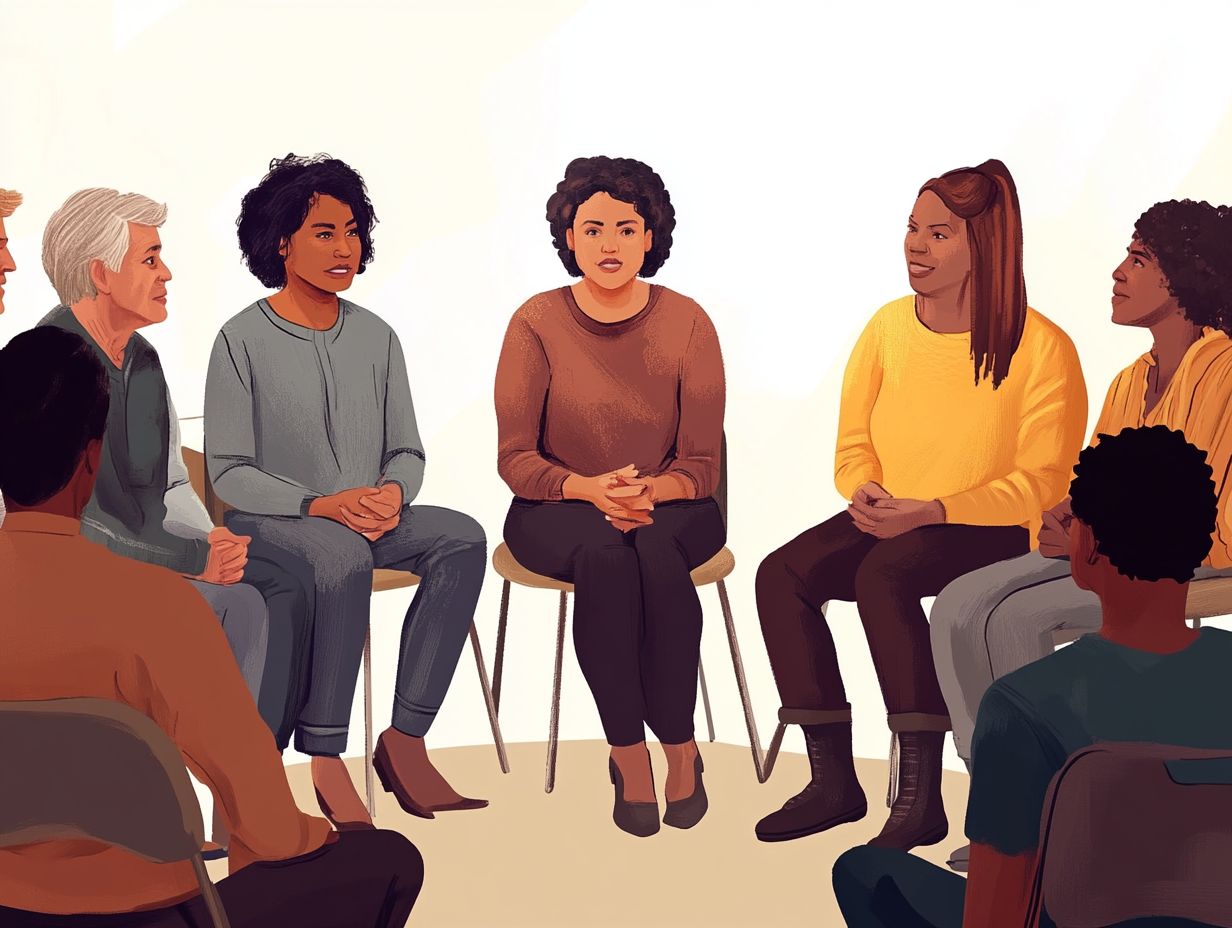
Group therapy in cancer treatment provides a supportive environment for cancer survivors to share experiences and feelings and emotions related to their diagnosis.
Group therapy helps address anxiety, depression, and relationship changes, enhancing emotional well-being and quality of life.
Participants learn coping strategies and develop social skills to navigate their cancer journey, improving their overall emotional state.
Understanding the Purpose and Benefits
Group therapy for cancer patients provides emotional support, reduces isolation, and fosters coping strategies through sharing experiences.
These sessions create a safe space for vulnerability, encouraging participants to connect and learn diverse perspectives on similar challenges.
Group therapy enhances well-being by offering a sense of community and enablement during cancer treatment.
Types of Group Therapy for Cancer Patients
Group therapy types for cancer patients include:
- Support groups provide emotional support and shared experiences among cancer patients.
- Psychoeducational groups offer information about cancer management and coping strategies.
- Cognitive-behavioral therapy groups focus on addressing negative thoughts and behaviors associated with cancer diagnosis and treatment.
- Community groups and advocacy groups offer a sense of community and peer support.
Group therapy types for cancer patients include:
- Support groups provide emotional support and shared experiences among cancer patients.
- Psychoeducational groups offer information about cancer management and coping strategies.
- Cognitive-behavioral therapy groups focus on addressing negative thoughts and behaviors associated with cancer diagnosis and treatment.
Support Groups vs. Therapy Groups
Support groups focus on sharing experiences and emotional well-being among cancer patients, providing a community for emotional healing.
Therapy groups use structured interventions led by professionals to enhance coping strategies and provide psychosocial support for cancer patients.
Both types of groups help address emotional and psychological challenges faced by cancer patients. Additionally, some therapy groups may incorporate relaxation techniques and stress management strategies.
Support groups focus on sharing experiences and emotional well-being among cancer patients, providing a community for emotional healing.
Therapy groups use structured interventions led by professionals to enhance coping strategies and provide psychosocial support for cancer patients.
Both types of groups help address emotional and psychological challenges faced by cancer patients.
Benefits of Group Therapy for Cancer Patients

Group therapy provides emotional support for cancer patients by connecting individuals with shared experiences.
Group therapy helps cancer patients develop coping strategies through shared advice and experiences.
Quality of life improves for cancer patients in group therapy by reducing feelings of isolation and anxiety.
Group therapy aids in managing anxiety and depression, enhancing psychological well-being for cancer patients. Therapy groups may also help with addressing psychosocial problems and fostering personal growth.
Group therapy provides emotional support for cancer patients by connecting individuals with shared experiences.
Group therapy helps cancer patients develop coping strategies through shared advice and experiences.
Quality of life improves for cancer patients in group therapy by reducing feelings of isolation and anxiety.
Group therapy aids in managing anxiety and depression, enhancing psychological well-being for cancer patients.
Emotional Support and Coping Strategies
Emotional support and coping strategies in group therapy for cancer patients involve providing a safe space for processing emotions and learning techniques to manage mental distress.
Group therapy promotes sharing experiences, which helps lessen emotional burdens and offers valuable coping mechanisms like mindfulness and cognitive restructuring.
These strategies enhance resilience and well-being by enabling patients to confront anxiety and depression. Emotional support from peers can also help improve self-esteem and overall emotional state.
Emotional support and coping strategies in group therapy for cancer patients involve providing a safe space for processing emotions and learning techniques to manage mental distress.
Group therapy promotes sharing experiences, which helps lessen emotional burdens and offers valuable coping mechanisms like mindfulness and cognitive restructuring.
These strategies enhance resilience and well-being by enabling patients to confront anxiety and depression.
Improved Communication and Social Connection
Improved communication and social connection are key benefits of group therapy for cancer patients, providing a platform to share experiences and build supportive relationships.
Group therapy enables patients to express emotions, fostering empathy and validation through shared understanding, which enhances emotional well-being and social skills.
Therapeutic activities within groups strengthen bonds, forming a resilient support network during the cancer journey. This support network can include family members, friends, and the health care team.
Improved communication and social connection are key benefits of group therapy for cancer patients, providing a platform to share experiences and build supportive relationships.
Group therapy enables patients to express emotions, fostering empathy and validation through shared understanding, which enhances emotional well-being.
Therapeutic activities within groups strengthen bonds, forming a resilient support network during the cancer journey.
How to Find and Join a Group Therapy Program
To find and join a group therapy program, start by searching online for local mental health clinics or hospitals offering group therapy sessions. You can also explore online resources and chat rooms dedicated to cancer support.
Contact these facilities to inquire about available programs and registration processes. Consider specific needs like cancer support when choosing a program.
Once a suitable program is identified, follow the registration instructions provided by the facility to join the group therapy sessions. It’s also helpful to check privacy settings and understand the structure of the program.
To find and join a group therapy program, start by searching online for local mental health clinics or hospitals offering group therapy sessions.
Contact these facilities to inquire about available programs and registration processes.
Consider specific needs like cancer support when choosing a program.
Once a suitable program is identified, follow the registration instructions provided by the facility to join the group therapy sessions.
Resources and Recommendations

To find a suitable group therapy program for cancer support, explore resources like CancerCare, which offers free counseling services and support groups for specific cancer types.
The American Cancer Society provides directories of local support programs and advocacy initiatives.
Online support platforms and social media groups dedicated to cancer support offer valuable insights and peer connections.
Considerations Before Joining a Group Therapy Program
Before joining a group therapy program, consider the therapy goals, group size, and facilitator’s qualifications.
Evaluate your comfort with speaking in a group and assess the group’s focus to ensure it aligns with your needs.
Consider logistical aspects like schedule, location, and cost.
Assessing Personal Needs and Preferences
Assessing personal needs and preferences is crucial when choosing a cancer support group therapy program. Consider emotional challenges, preferred group size, communication styles, session logistics like location, facilitator qualifications, and health insurance coverage.
Personal assessment ensures alignment with therapy goals and enhances satisfaction.
Frequently Asked Questions
What is group therapy and how can it benefit cancer patients?

Group therapy is a form of psychotherapy where a small group of individuals meet regularly with a trained therapist to discuss and process their experiences and emotions. For cancer patients, group therapy can provide a supportive and safe environment to cope with the challenges of the disease and its treatment. Group therapy sessions can also include stress management techniques and support services from hospitals or community centers.
What is group therapy and how can it benefit cancer patients?
Group therapy is a form of psychotherapy where a small group of individuals meet regularly with a trained therapist to discuss and process their experiences and emotions. For cancer patients, group therapy can provide a supportive and safe environment to cope with the challenges of the disease and its treatment.
What are the specific benefits of group therapy for cancer patients?
Group therapy for cancer patients can provide a sense of community and belonging, decrease feelings of isolation, and improve coping skills. It can also provide emotional support, increase self-esteem, and reduce anxiety and depression. Furthermore, these sessions can help patients address sensitive issues and practical problems related to their diagnosis.
Group therapy for cancer patients can provide a sense of community and belonging, decrease feelings of isolation, and improve coping skills. It can also provide emotional support, increase self-esteem, and reduce anxiety and depression.
Is group therapy suitable for all cancer patients?
Group therapy may not be suitable for everyone, as each individual’s needs and preferences may differ. However, group therapy can be beneficial for most cancer patients, regardless of their age, gender, or cancer type. It is important to assess one’s comfort level with group settings and the specific focus of the group to ensure it meets personal needs.
Group therapy may not be suitable for everyone, as each individual’s needs and preferences may differ. However, group therapy can be beneficial for most cancer patients, regardless of their age, gender, or cancer type.
How does group therapy compare to individual therapy for cancer patients?
Both group therapy and individual therapy can be effective for cancer patients, but they offer different benefits. While individual therapy allows for more personalized treatment and one-on-one attention, group therapy provides a supportive and understanding community of individuals who share similar experiences. Group therapy also offers the added benefit of peer support and community engagement.
Both group therapy and individual therapy can be effective for cancer patients, but they offer different benefits. While individual therapy allows for more personalized treatment and one-on-one attention, group therapy provides a supportive and understanding community of individuals who share similar experiences.
Are there any potential downsides to group therapy for cancer patients?
Group therapy may not be appropriate for cancer patients who are struggling with severe mental health issues or those who are unable to fully participate due to physical limitations. Additionally, some individuals may feel uncomfortable sharing their experiences in a group setting, and that is completely understandable. For those individuals, one-on-one counseling might be a better option.
Group therapy may not be appropriate for cancer patients who are struggling with severe mental health issues or those who are unable to fully participate due to physical limitations. Additionally, some individuals may feel uncomfortable sharing their experiences in a group setting, and that is completely understandable.
How can I find a group therapy session for cancer patients?
You can ask your doctor or therapist for recommendations, search online for support groups in your area, or reach out to cancer organizations such as the American Cancer Society for resources and support. It’s essential to find a group that feels comfortable and supportive for you. Additionally, you can explore online support platforms, telephone support, and chat rooms dedicated to cancer support.
You can ask your doctor or therapist for recommendations, search online for support groups in your area, or reach out to cancer organizations such as the American Cancer Society for resources and support. It’s essential to find a group that feels comfortable and supportive for you.