Creating an advocacy support group empowers individuals to unite for a common cause, driving social change and addressing critical issues such as environmental concerns and social justice. These advocacy groups are instrumental in organizing collective actions, influencing public opinion, and leveraging digital tools for outreach and raising awareness. They engage advocates in advocacy campaigns, social media outreach, and grassroots activism.
Advocacy support groups offer numerous benefits, including emotional support, a sense of community, and the opportunity for individuals to engage in meaningful activism. By joining these groups, members connect with like-minded individuals, share resources, and participate in collective actions that enhance both personal growth and community impact. Members can also engage in fundraising activities, petition signing, and coalition building to further their causes.
Establishing your own advocacy support group involves key steps such as developing outreach strategies and building relationships with local businesses:
- Identifying a cause
- Recruiting passionate members
- Organizing regular meetings
- Goal identification and setting measurable objectives
- Utilizing advocacy software for effective management
Effective communication and organization are crucial for maintaining focus and achieving the group’s objectives. By addressing challenges and conflicts collaboratively, these groups can create impactful change within their communities. Community leaders and decision-makers play key roles in supporting and advancing the group’s mission.
Learn from successful advocacy groups like the Sierra Club and Citizen’s Action Coalition, which have made significant strides in influencing policies and raising awareness. Their success stories demonstrate the power of collective advocacy in promoting positive change. These groups have implemented effective advocacy strategies and mobilized supporters for climate action and environmental justice.
Key Takeaways:
Understanding Advocacy Support Groups

Advocacy support groups are organizations that unite individuals with a common cause to promote social change and address issues like environmental concerns and social justice through advocacy campaigns and community support.
These groups work by organizing collective actions, influencing public opinion, and leveraging digital tools for outreach and awareness. They also engage in digital advocacy and relationship building with key players such as Congress and state legislature.
What are Advocacy Support Groups?
Advocacy support groups are organizations focused on promoting specific causes by raising awareness and influencing public policy.
These groups unite individuals with shared interests or concerns to drive community action and change.
Advocacy support groups often consist of volunteers and activists collaborating with government, nonprofits, and community organizations. They engage in legislative advocacy and work closely with local governments to drive change.
Their purpose is to amplify community voices and promote collective action.
Benefits of Joining an Advocacy Support Group
Joining an advocacy support group provides emotional support, offers a sense of belonging, and enables individuals to connect with like-minded people working towards shared goals.
Advocacy support groups give the power to members through shared experiences, resources, and collective action, enhancing personal growth and community impact.
Emotional Support and Community
Joining an advocacy support group provides emotional support and a sense of community to its members.
This environment helps individuals connect over shared experiences, offering mutual encouragement and coping strategies.
Members gain emotional resilience and navigate challenges together, reinforcing the belief that no one faces struggles alone.
Advocacy and Activism Opportunities
Advocacy and activism opportunities include participating in support groups, fundraising activities, and coalition building for specific causes. These opportunities extend to public forums and advocacy challenges, fostering youth involvement and stakeholder engagement.
These opportunities enable individuals to engage in campaign management, raise awareness, and mobilize communities.
Engagement fosters unity among advocates and strengthens coalitions to amplify collective voices.
Advocacy efforts contribute to outcomes like increased funding, policy changes, public engagement, and measurable objectives achieved through effective advocacy campaigns and action plans.
Creating Your Own Advocacy Support Group
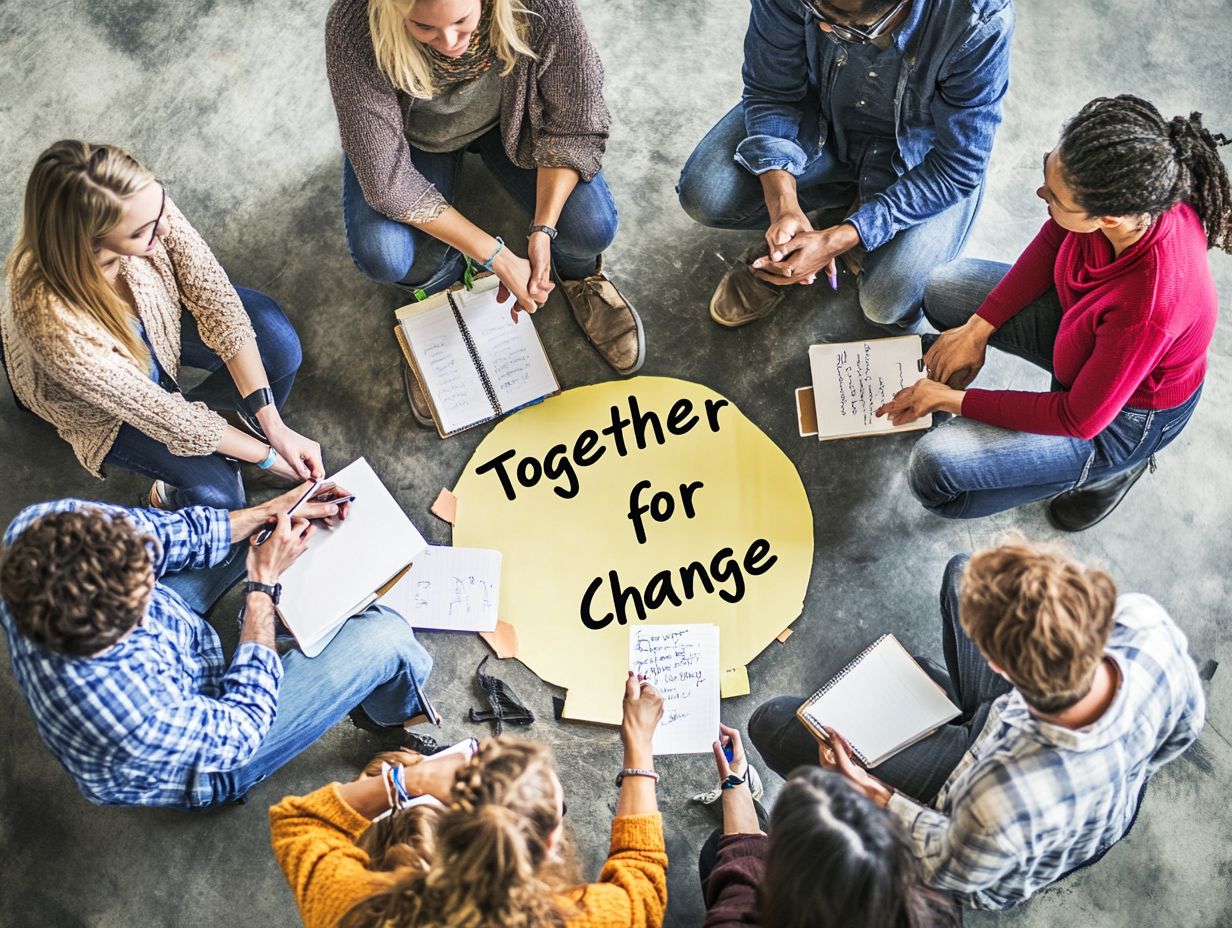
Creating an advocacy support group involves identifying a cause, defining the group’s purpose, recruiting members, and organizing regular meetings. Effective campaign planning and utilizing outreach tools are essential for success.
- First, determine the community’s needs and how your group’s mission can address them.
- Next, recruit members who are passionate about the cause and can contribute their skills.
- Organize meetings to discuss objectives, plan activities, and establish roles.
- Utilize social media and local partnerships to increase visibility and attract more participants.
Consistent communication and member engagement are key to a successful advocacy support group.
Identifying a Cause and Purpose
Identifying a cause and purpose is the first step in creating an advocacy support group. This involves aligning with the values of potential members and understanding community issues like environmental challenges.
The process includes gathering community input through surveys to determine pressing concerns and ensure the cause resonates with local needs.
A clear cause focuses group efforts and increases effectiveness in addressing specific issues.
Building a Support Network
Building a support network involves connecting with community members, leaders, and organizations to unify efforts and amplify advocacy group goals.
Effective strategies include coalition building and recruiting members from grassroots organizations.
Creating an inclusive environment ensures collaboration, allowing advocacy efforts to lead to impactful change.
Running and Maintaining an Advocacy Support Group
Running and maintaining an advocacy support group involves organizing meetings, facilitating communication, setting goals, and providing resources to support members.
Key tasks include coordinating activities, managing group dynamics, and ensuring alignment with advocacy objectives.
Effective Communication and Organization
Effective communication and organization are crucial for advocacy support groups to collaborate efficiently and maintain mission focus.
These elements involve using communication tools to streamline discussions and project management software to track tasks and deadlines.
Effective communication ensures all members are informed, while organization allows for strategic planning and execution.
Addressing Challenges and Conflicts

Addressing challenges and conflicts in an advocacy support group involves recognizing differing opinions and conflicting priorities early.
Effective communication, facilitated discussions, and active listening are strategies to resolve conflicts and maintain group unity.
Building consensus on shared values strengthens group commitment and aligns efforts toward common goals.
Impact and Success Stories of Advocacy Support Groups
Advocacy support groups are organizations that mobilize individuals to drive social or policy change by raising awareness and providing resources. They employ advocacy software, communication activities, and public support to achieve their goals.
Success stories include advocacy groups influencing legislative reforms, securing funding for community projects, and increasing public awareness on critical issues.
These groups impact communities by give the power toing members to advocate for change effectively.
Real-Life Examples of Advocacy Support Groups
Sierra Club and Citizen’s Action Coalition are real-life examples of advocacy support groups that engage in environmental advocacy and nonprofit advocacy.
Sierra Club advocates for environmental justice by organizing communities and influencing policy changes.
Citizen’s Action Coalition protects public interests by challenging corporate influence and promoting sustainable practices.
These groups play crucial roles in promoting cleaner air and water policies, safeguarding natural resources, and influencing environmental policy at various levels, including local businesses and school board engagements.
Frequently Asked Questions
What is an advocacy support group?
An advocacy support group is a group of individuals who come together to support a cause or issue that they are passionate about, and work towards creating change and raising awareness for that cause.
How do I start an advocacy support group?

To start an advocacy support group, you should first identify the cause or issue that you want to advocate for. Then, gather a group of like-minded individuals who are also passionate about the same cause and discuss your goals and objectives for the group.
What are the benefits of creating an advocacy support group?
Creating an advocacy support group can bring together individuals with a shared passion for a cause, providing a sense of community and support. It also allows for a more powerful and organized approach to advocating for change and raising awareness.
How do I promote my advocacy support group?
You can promote your advocacy support group through various means such as social media, word of mouth, and reaching out to organizations or individuals who may be interested in your cause. You can also collaborate with other organizations or groups to reach a wider audience.
How can I ensure the success of my advocacy support group?
To ensure the success of your advocacy support group, it is important to have a clear and specific goal and mission. Additionally, effective communication, organization, and commitment from all members are essential for the group’s success. Regular meetings and events can also help keep the group motivated and on track.
Do I need any specific skills or qualifications to create an advocacy support group?
No, you do not need any specific skills or qualifications to create an advocacy support group. However, having strong leadership, communication, and organizational skills can be beneficial in successfully managing the group. It is also important to have a deep passion and commitment to the cause you are advocating for. Engaging with community leaders and grassroots organizations, utilizing digital tools for mobilizing supporters, and using social media platforms for outreach strategies can significantly enhance your impact. Additionally, understanding environmental issues, fundraising activities, and effective petition signing can help in raising public awareness and gaining public support for your advocacy challenges.