Faith-based support plays a critical role in the healing journey for trauma survivors, offering community, comfort, and spiritual empowerment. By aligning with spiritual beliefs, this support system helps individuals reconnect with their faith and spirituality, fostering psychological health and well-being. Faith communities provide safe spaces for recovery, enabling emotional and mental resilience through structured assistance and individual spiritual practices.
Various forms of faith-based support include:
- Community involvement
- Spiritual guidance from religious organizations
- Personal practices like meditation and prayer
These elements work together to promote holistic health by combining traditional beliefs, such as ancestral and indigenous practices, with modern coping mechanisms, enhancing emotional, mental, and physical well-being.
Engaging with faith-based support can lead to stronger coping strategies, reduced stress levels, and healthier lifestyle choices. Trauma survivors and Native survivors can access these benefits by connecting with local religious organizations, online support groups, and spiritual workshops dedicated to trauma recovery. Through these resources, individuals can foster resilience and well-being within a supportive faith community.
Key Takeaways:
The Importance of Faith-Based Support in Healing
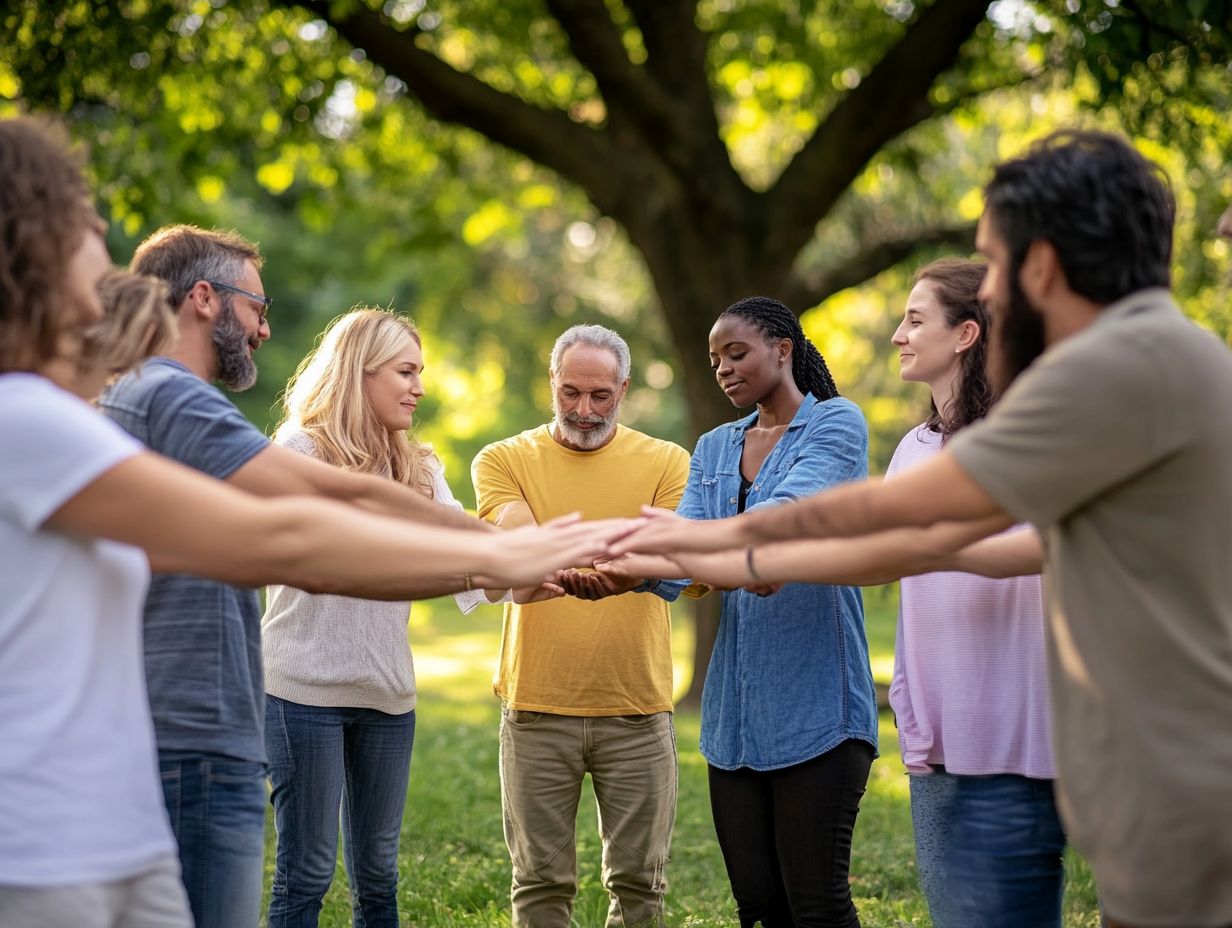
Faith-based support is essential for trauma survivors by providing community, comfort, and enablement that align with spiritual beliefs.
Faith-based support helps individuals reconnect with their faith, promoting psychological healing and well-being.
Faith communities offer safe spaces for recovery from trauma and emotional distress.
Types of Faith-Based Support
Types of faith-based support include:
- Religious community involvement
- Structured assistance from faith organizations
- Individual spiritual practices
Faith-based support helps individuals by combining traditional beliefs with modern coping strategies and coping mechanisms for recovery and enablement.
Religious Communities and Organizations
Religious communities and organizations offer structured support for trauma survivors.
These organizations provide group meetings, workshops, and counseling sessions to facilitate healing, empowerment, and spiritual enablement.
Specialized programs like trauma-informed care and mentoring initiatives address the unique needs of survivors.
Training for clergy and lay leaders helps recognize signs of trauma and provide appropriate responses.
Advocacy efforts promote awareness and education about domestic violence and abuse, addressing societal challenges and empowering survivors.
Safe spaces for sharing personal experiences encourage spiritual enrichment and resilience.
Individual Spiritual Practices
Individual spiritual practices are personal activities like meditation, prayer, and reflection that foster a connection to one’s faith.
These spiritual practices aid trauma recovery by promoting mental and emotional health, offering comfort and empowerment. Meditation enhances mindfulness, prayer provides solace, and reflection offers insight into personal experiences. These practices support resilience and personal growth, allowing a reconnection with a higher power.
Benefits of Faith-Based Support

Faith-based support provides emotional comfort, mental well-being, and physical health benefits for trauma survivors.
Faith-based support fosters strong coping strategies through community engagement and spiritual practices, promoting holistic health and psychological implications.
Faith-based environments encourage spirituality and awe, aiding healing and reconnection with a higher power.
Emotional and Mental Well-being
Faith-based support improves emotional and mental well-being by providing trauma survivors with coping mechanisms for anxiety and depression.
Faith-based support includes shared worship, prayer groups, and counseling that promote community and spiritual connection.
These practices help trauma survivors build resilience, find peace, and experience spiritual healing by relying on a higher power.
Physical Health and Healing
Faith-based support positively impacts physical health and healing for trauma survivors by promoting healthier lifestyle choices, self-care practices, and a sense of accountability.
Participation in faith-based activities leads to lower stress levels, better immune responses, and enhanced physical health, contributing to overall well-being.
Regular involvement in religious communities is linked to a 30% lower risk of premature death.
Faith communities provide support networks, nutritious meals, and exercise programs, encouraging healthier habits and self-care practices.
This support fosters resilience and improves recovery from trauma.
How to Access Faith-Based Support
Access faith-based support by contacting local religious organizations, joining online faith-based support groups, and attending spiritual workshops designed for trauma recovery.
Engage with faith leaders for guidance and connect with community services offering faith-oriented counseling, including support for family problems and personal sacrifices.
Utilize these resources to foster resilience and well-being within a supportive faith community.
Finding a Supportive Community

Finding a supportive community is important for trauma survivors seeking faith-based support.
Trauma survivors can explore local religious institutions, outreach programs, and online forums for trauma recovery, spiritual guidance, and insights into ancestral beliefs.
Supportive communities provide emotional support and a platform for sharing experiences.
Survivors should attend community events and workshops to engage with these groups.
Faith organizations often host support groups for deeper connections.
Online platforms, such as faith-based social media groups and recovery blogs, help those in remote areas find support.
Emotional health thrives in open and trusting environments.
Utilizing Spiritual Practices
Utilizing spiritual practices involves engaging in activities like meditation, prayer, and journaling to support emotional healing for trauma survivors.
Spiritual practices help survivors connect with faith, enhance coping mechanisms, and find strength in their beliefs.
These spiritual practices, combined with community support, promote holistic recovery and resilience, addressing both emotional health and physical health.
Frequently Asked Questions
What is the role of faith-based support in healing?
The role of faith-based support in healing is to provide spiritual, emotional, and social support to individuals who are going through a healing process. This type of support recognizes the importance of faith and spirituality in promoting healing and recovery.
How can faith-based support help in the healing process?
Faith-based support can help in the healing process by providing a sense of comfort, hope, and strength to individuals who are facing challenges in their health. It can also provide a sense of community and belonging, which can improve overall well-being and promote healing.
What types of faith-based support are available for those seeking healing?
There are various types of faith-based support available, such as prayer groups, spiritual counseling, support groups, and religious services. These support systems can be found in places of worship, hospitals, and community organizations.
Is faith-based support only for those who practice a specific religion?
No, faith-based support is available to individuals of all faiths and beliefs. It is not limited to a specific religion and can be tailored to individual needs and beliefs.
Can faith-based support be beneficial for both physical and emotional healing?
Yes, faith-based support can be beneficial for both physical and emotional healing. It can provide comfort and strength during physical illness or injury, as well as offer emotional support and coping mechanisms for mental health challenges.
How can someone access faith-based support for healing?
There are various ways to access faith-based support for healing, such as reaching out to a local place of worship, speaking with a healthcare provider or counselor, or joining a support group. It is important to communicate your needs and beliefs to find the most suitable support system for you.