Staying organized is essential for maintaining productivity and managing daily tasks effectively. Here are some of the best tips to help you stay organized and enhance your efficiency:
- Create a Daily To-Do List: Prioritize tasks and use digital tools like Asana or Google Docs for easy access, helping with task management and digital organization.
- Prioritize Your Tasks: Use techniques like the Eisenhower matrix to focus on urgent and important activities.
- Use a Calendar or Planner: Choose between digital calendars like Google Calendar or traditional paper planners as planning tools to manage your time effectively and enhance scheduling software usage.
- Set Reminders and Deadlines: Utilize tools like Google Calendar and phone notifications to ensure timely completion of tasks.
- Declutter Your Workspace: Keep essential items and organize tasks into manageable steps for workspace decluttering and clutter reduction to improve focus and productivity.
- Keep Important Documents in One Place: Use a color-coded folder system for quick retrieval and regularly update your documents.
- Utilize Digital Tools for Organization: Tools like Asana and Salesforce help manage projects, enhance team collaboration and project organization, and support cross-functional work.
- Develop a Filing System: Create an organized method for storing documents to improve accessibility.
- Delegate Tasks When Possible: Assign responsibilities to team members to improve efficiency, effective delegation, and collaboration, supporting task delegation and ownership.
- Take Breaks to Recharge: Use techniques like the Pomodoro technique to maintain productivity and manage stress.
- Set Realistic Goals: Use the SMART framework to ensure objectives are achievable and aligned with long-term vision.
- Review and Reflect on Your Progress: Regularly assess task completion and refine organizational strategies.
- Don’t Be Afraid to Say No: Establish boundaries to focus on important tasks and maintain work-life balance.
- Practice Time Management Techniques: Employ methods like time blocking and the Pomodoro technique to improve focus, manage large projects, and enhance time efficiency and time management.
- Continuously Evaluate and Adjust Your Organizational Methods: Regularly refine your approach to adapt to changing priorities and enhance productivity.
By incorporating these tips into your daily routine, you can create a more organized and productive work environment, ultimately leading to greater success in achieving your goals.
Key Takeaways:
1. Create a Daily To-Do List

Create a daily to-do list by listing tasks in order of priority to enhance productivity and manage time effectively.
Using digital tools like Asana or Google Docs can streamline the process and allow easy access across devices.
Set a specific time each day to create or review the list to maintain organization.
2. Prioritize Your Tasks
Task prioritization involves organizing tasks by urgency and importance to manage daily activities effectively and meet project deadlines.
Using prioritization techniques like the Eisenhower matrix helps identify urgent and important tasks, ensuring focus on key activities that align with long-term goals.
Effective task prioritization reduces stress, increases work efficiency, and enhances productivity by providing clarity and control over workloads.
3. Use a Calendar or Planner
Using a calendar or planner helps manage time and organize tasks.
A digital calendar like Google Calendar or Trello integrates with other tools for efficiency.
A traditional paper planner offers a tactile experience and can be personalized.
Choosing the right option enhances organization and focus.
4. Set Reminders and Deadlines
Setting reminders and deadlines is key for effective task management by helping ensure timely completion of tasks.
Use tools like Google Calendar, task management software, phone notifications, and sticky notes to set reminders.
Deadlines create urgency and boost productivity.
Regular use of reminders and deadlines improves focus and accountability.
5. Declutter Your Workspace
Decluttering your workspace improves focus and productivity by promoting mental clarity and reducing distractions.
Effective decluttering techniques include keeping items that are essential and organizing tasks into manageable steps.
These practices enhance the workspace and positively impact mental well-being.
6. Keep Important Documents in One Place

Keeping important documents in one place ensures easy access and reduces clutter.
Organizing documents using a color-coded folder system categorizes files for quick retrieval.
Regularly review and update documents to maintain an organized workspace.
7. Utilize Digital Tools for Organization
Digital tools for organization improve productivity by streamlining task tracking, email management, and project coordination.
Tools like Asana, Remember the Milk, and Salesforce help manage projects, track tasks, and organize customer interactions efficiently.
These tools enhance team collaboration and task delegation.
8. Develop a Filing System
Developing a filing system involves creating an organized method for storing and retrieving documents to improve accessibility and reduce search time.
A filing system works by categorizing documents into clear, labeled sections, such as finance, projects, or client information, using physical folders or digital folders in cloud storage.
Regularly auditing the filing system ensures outdated documents are archived or discarded, maintaining an efficient and intuitive structure.
9. Delegate Tasks When Possible
Delegating tasks involves assigning responsibilities to team members to improve efficiency and collaboration.
Delegating tasks requires assessing team strengths and workloads to assign tasks effectively.
Delegating tasks benefits from clear communication, setting expectations, and maintaining oversight through check-ins.
Delegating tasks encourages a supportive environment, enhances performance, and builds team cohesion.
10. Take Breaks to Recharge
Taking breaks to recharge is essential for maintaining productivity and managing stress.
Regular breaks, such as using the Pomodoro technique, alternate between focused work and short rest intervals.
Short breaks (5-10 minutes) refresh the mind, while longer breaks (15-30 minutes) provide deeper relaxation and prevent burnout.
Incorporating these breaks improves focus, increases creativity, and prevents fatigue.
11. Set Realistic Goals
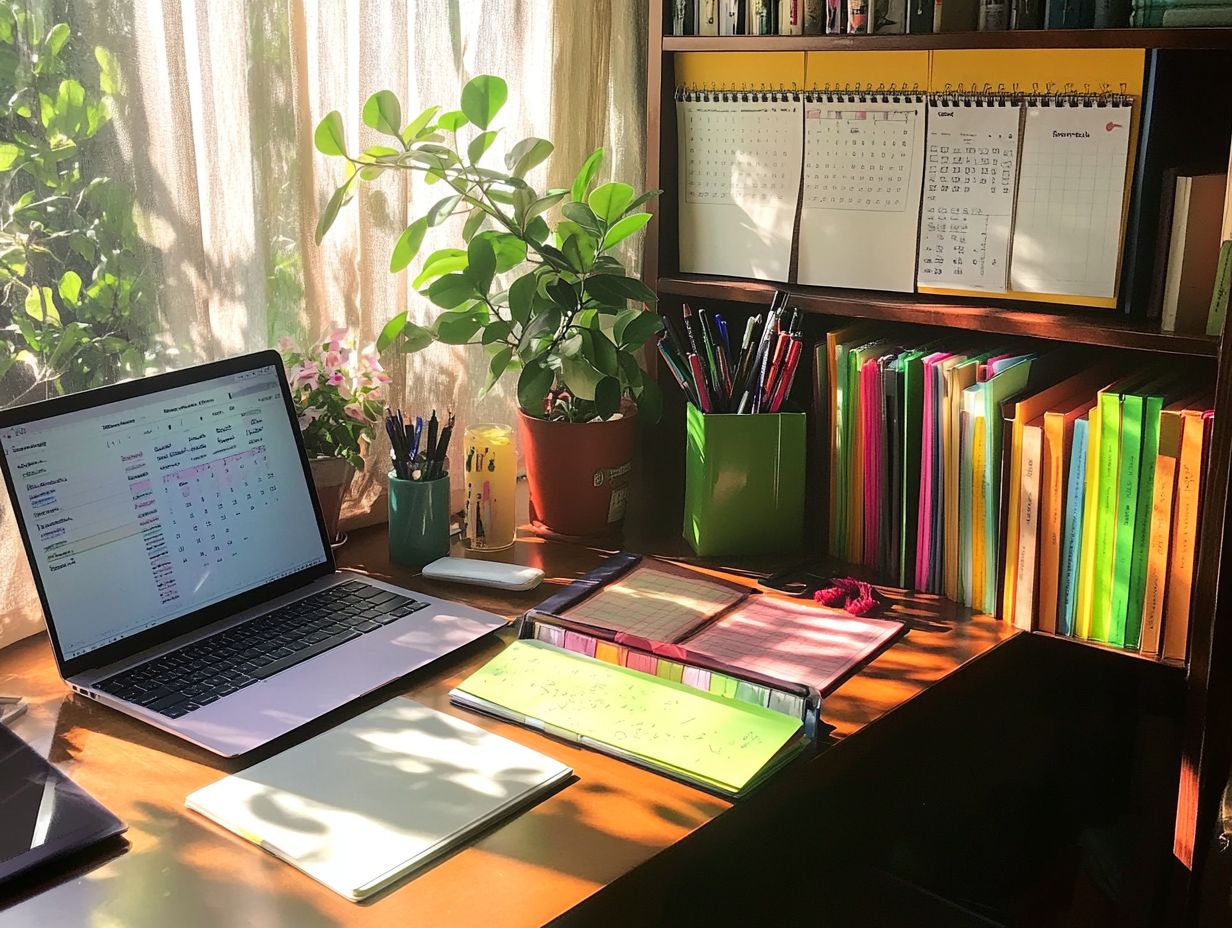
Setting realistic goals is crucial for effective planning and personal development by ensuring objectives are achievable and fostering motivation.
Using the SMART framework helps break down goals into actionable steps that align with long-term vision and enhance productivity.
Structured goal-setting cultivates purpose and direction, leading to consistent progress.
12. Review and Reflect on Your Progress
Regularly reviewing and reflecting on your progress helps assess task completion, identify areas for improvement, and refine organizational strategies.
Using tools like journals or digital apps can track progress and visualize goals, enhancing personal productivity and growth.
13. Don’t Be Afraid to Say No
Saying no is essential for maintaining work-life balance by managing time and commitments effectively.
Establishing boundaries allows focus on important tasks, enhancing productivity and job satisfaction.
Communicate boundaries clearly with phrases like:
- ‘I need to prioritize my workload’
- ‘I cannot take on more responsibilities now.’
Honoring personal priorities creates a sustainable work environment.
14. Practice Time Management Techniques
Practice time management techniques like the Pomodoro technique and time blocking to improve productivity and meet daily priorities efficiently.
The Pomodoro technique involves 25-minute work sessions with short breaks to maintain focus.
Time blocking dedicates specific time slots to tasks, reducing distractions and improving focus.
These methods help manage large projects and enhance job satisfaction.
15. Continuously Evaluate and Adjust Your Organizational Methods
Regular evaluation and adjustment of organizational methods improve personal development and work efficiency by adapting to changing priorities.
Continuous assessment identifies process bottlenecks, streamlines tasks, and enhances productivity.
Experimentation with different approaches increases efficiency and fosters innovation.
Frequently Asked Questions

What Are the Best Organizational Tips for Staying Organized?
Staying organized can be challenging, but with the right organizational tips and tricks, it can become a habit and make your life much easier, improving personal organization and task tracking.
How can I declutter my workspace and stay organized?
The key to staying organized is to declutter your workspace regularly. Set aside some time each week to go through your belongings and get rid of anything you no longer need or use, aiding in digital clutter reduction and effective workspace organization. This will help create a sense of order and prevent clutter from building up.
What are some ways to prioritize tasks and stay on top of my digital to-do lists?
One of the best organizational tips for staying organized is to prioritize your tasks through effective task management. Use a to-do list or a planner to write down all your tasks and rank them according to their importance. This will help you focus on your daily priorities and stay on top of your responsibilities, enhancing your work productivity and personal organization.
How can I maintain my organization system in the long run?
Consistency is key when it comes to staying organized. Set aside a few minutes each day to tidy up and practice workspace organization by putting things back in their designated places. This will help you maintain your organization system, prevent clutter from building up again, and support stress reduction.
What role does technology play in staying organized?
Technology can be a great tool for staying organized, aiding in time management and project organization. There are various apps such as Asana and organizational tools like scheduling software that can help you keep track of your tasks, schedule, and important information. Find the ones that work best for you and incorporate them into your routine for improved task tracking and digital organization.
How can I be more mindful and intentional about staying organized?
Staying organized is not just about physical clutter, it also involves digital clutter and mental clutter. Take some time to reflect on your habits and thought patterns, using productivity techniques like the Pomodoro technique and task prioritization, that may contribute to disorganization. By being more mindful and intentional, you can develop healthier habits, utilize effective planning, and maintain a more organized life, benefiting from work-life balance and emotional support.