
Curious how a simple blood test can shed light on the complex battle against cancer? Lactate Dehydrogenase (LDH), a common enzyme in your blood, is increasingly recognized as a valuable indicator in detecting cancer, understanding tumor behavior, and monitoring treatment progress. By learning how LDH levels relate to your body’s cellular activity, you can gain clearer insights into your diagnosis and actively participate in your care. This guide unpacks the science behind LDH, its role in cancer, and practical tips for discussing your test results with your healthcare team.
Understanding LDH and Its Role in Your Body
Lactate Dehydrogenase (LDH) is an enzyme found in nearly every tissue, from your muscles to your organs. Its main job is helping cells convert sugars into energy, which is essential for survival. When cells get damaged or die—due to injury, infection, or cancer—they release LDH into your bloodstream. That’s why elevated LDH levels may signal that something is affecting your body’s cells.
Why LDH Matters in Cancer Detection and Monitoring
Cancer cells often have a higher energy demand and altered metabolism compared to normal cells. This change can cause increased LDH production and release. Doctors look at LDH levels as a piece of the puzzle alongside scans, biopsies, and other lab results. Higher LDH levels can suggest a larger or more aggressive tumor, and tracking these levels during your treatment may help your oncologist see how well your therapy is working.
Recent research has connected elevated LDH to outcomes in cancers such as lymphoma, melanoma, and lung cancer. New treatments are even exploring ways to target the altered metabolism of cancer cells, including pathways involving LDH, to slow tumor growth.
Visual Resources for Better Understanding
Visual aids can make it easier to grasp LDH’s role. For instance, comparing how a cancer cell’s metabolism differs from normal cells highlights why LDH is important. Charts depicting typical LDH ranges versus elevated levels can also clarify what your lab results mean.
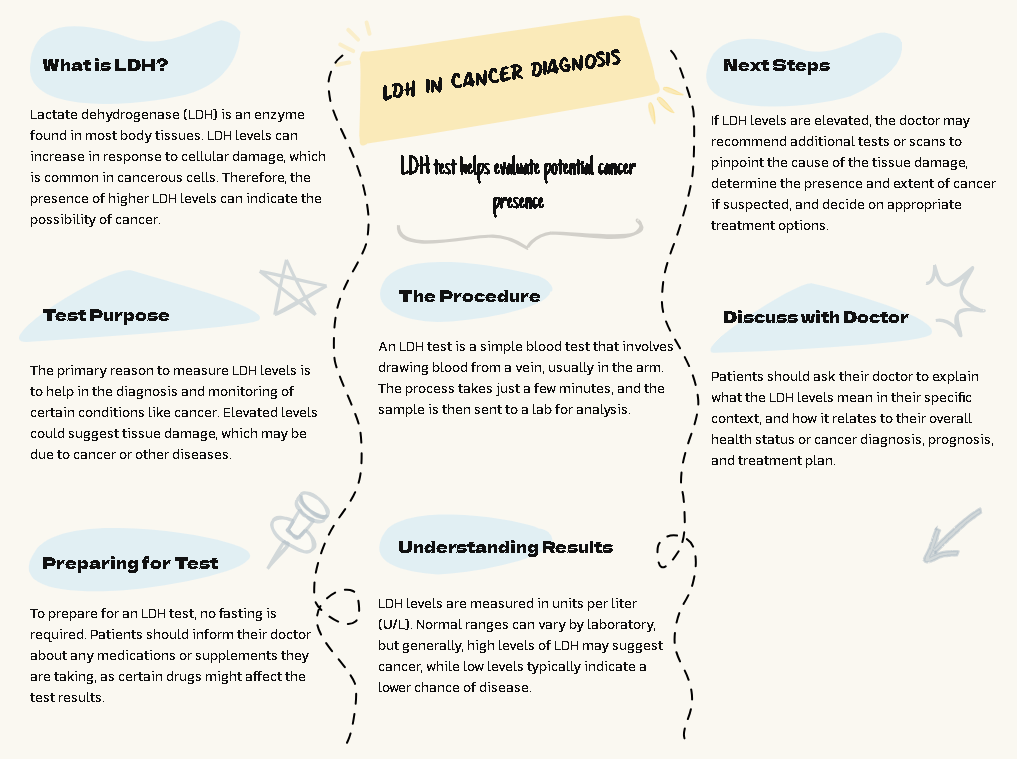
Interpreting LDH Test Results – What You Should Know
It’s important to remember that elevated LDH isn’t a cancer diagnosis by itself—it can rise due to many reasons like infections or liver problems. If your LDH levels are higher than normal, your healthcare provider will consider other test results and your overall health to understand what’s going on.
If you’re going through cancer treatment, regular LDH tests can help monitor your progress. You might notice your values fluctuate, and your oncologist can explain what those changes mean for your care plan.
Questions to Discuss with Your Oncologist
- What do my LDH levels tell us about my specific type of cancer?
- How often will my LDH levels be tested during treatment?
- Could changes in LDH levels cause us to adjust my therapy?
- Are there lifestyle habits or other factors that could affect my LDH results?
Taking Charge: Lifestyle and LDH
While you can’t control everything, maintaining a healthy lifestyle may support your body’s overall metabolism. Balanced nutrition, regular physical activity as recommended, and managing stress are helpful steps. For more detailed guidance, visit resources like the American Cancer Society’s Nutrition and Physical Activity Guidelines.
Learn More from Trusted Sources
To deepen your understanding, consider these credible resources:
In Summary
LDH may be a small enzyme, but it holds big clues about your health. By tracking LDH levels along with other tests, you and your healthcare team gain valuable insight into cancer’s behavior and treatment response. Don’t hesitate to ask your doctor about what your LDH numbers mean—they’re there to help you navigate every step of your cancer journey.
Frequently Asked Questions (FAQs)
Q: Can LDH levels alone diagnose cancer?
A: No, LDH is a helpful marker but not specific to cancer. Elevated levels can result from other conditions like infections or liver disease. It’s one part of a comprehensive diagnostic process.
Q: How often should LDH be tested during cancer treatment?
A: The frequency depends on your cancer type and treatment plan. Your oncologist will guide you on how often to measure LDH to monitor your response.
Q: Can anything else affect my LDH levels besides cancer?
A: Yes, many factors such as heart attack, liver problems, intense exercise, or infections can raise LDH levels. Always discuss elevated results with your healthcare provider.
Q: Is it possible to lower LDH levels through lifestyle changes?
A: While maintaining a healthy lifestyle supports your overall well-being, it may not directly lower LDH if the elevation is due to cancer. Follow your doctor’s advice regarding treatment and self-care.
Q: Are there new treatments targeting LDH in cancer?
A: Research is ongoing into therapies that target cancer metabolism, including LDH pathways, aiming to starve tumors of energy. These are mostly in clinical trial phases but represent promising future options.