
If you’re a bone metastasis survivor wondering about yoga for recovery, you might be asking which gentle style-Restorative Yoga or Yin Yoga-feels safer for your body. This comparison breaks down their principles, poses, and risks like spinal stress and joints strain, especially for fracture prevention. You’ll get practical insights from clinical trials and experts to help you move confidently.
Key Takeaways:
Understanding Bone Metastasis

Bone metastasis occurs when cancer cells spread to the bones, creating unique challenges for mobility and daily comfort. This process weakens skeletal structure by disrupting normal bone remodeling, leading to areas of excessive fragility. Patients often experience persistent pain that intensifies with even minor movements.
Real-world effects include sharp discomfort during walking or lifting objects, as tumors create lytic lesions that compromise bone integrity ( Mayo Clinic). A common source is metastatic lung cancer, where cancer spreads from the lungs to bones, heightening these risks. Reduced stability heightens fall risks, prompting muscle guarding that further limits range of motion. These changes demand careful attention to any physical practice.
Gentle practices like restorative yoga and yin yoga support bone health in cancer patients through integrative oncology approaches. These methods emphasize props such as bolsters, blocks, and blankets to enable long held poses without strain. Such practices foster deep relaxation, activating the parasympathetic nervous system for healing.
Integrative oncology highlights yoga’s role in complementary alternative medicine, promoting circulation and flexibility while honoring the body’s limits. Poses inspired by masters like Paul Grilley and B.K.S. Iyengar target connective tissues, fascia, ligaments, and tendons through passive stretching. This approach enhances quality of life, mental calm, and mindfulness for survivors.
Impact on Bone Health and Mobility
Cancer spreading to bones often leads to fragility that limits simple activities like walking or bending. Micro-fractures from everyday stress emerge as bones lose density, causing sudden pain during routine tasks. Muscle guarding stiffens joints, creating a cycle of tension that restricts natural movement.
Early signs of compromised mobility include aching in weight-bearing areas after short walks or difficulty rising from chairs. Patients may notice increased fatigue or hesitation in poses that once felt easy. Recognizing these cues guides safe practices, preventing exacerbation of skeletal weakness.
Actionable insights involve starting with supported asanas using props for stability, much like in Iyengar yoga or hatha yoga traditions. Incorporate pranayama for breath awareness and dhyana for inner calm, easing the monkey mind. Gentle yoga supports the immune system and nervous system without overloading fragile structures.
Research published in Cancers indicates that movement-based interventions like restorative and yin yoga can safely enhance mobility and well-being for patients affected by bone metastasis, while yin yoga applies the 80% rule for subtle passive stretching. These calm the body, improve joint health, and promote circulation. Experts recommend such mindful practices to enhance flexibility and overall well-being.
Restorative Yoga Overview
Restorative yoga, popularized by Judith Hanson Lasater, emphasizes complete support for the body to foster profound rest. Practitioners use an array of props such as bolsters, blocks, and blankets to create fully supported asanas. This approach eliminates physical strain while promoting deep relaxation.
The core principles revolve around passive holding in comfortable positions for extended periods. These poses activate the parasympathetic nervous system, countering the effects of chronic stress common in cancer survivors. Breath awareness enhances this calming effect on the nervous system.
Unlike yin yoga’s focus on connective tissues, restorative yoga prioritizes mental calm and healing. It serves as complementary alternative medicine in integrative oncology, supporting quality of life for patients with bone metastasis. Experts recommend it for those seeking gentle restoration without joint pressure.
Holds typically last five to twenty minutes, encouraging mindfulness and release of the monkey mind. This practice nurtures the inner self, akin to shavasana in hatha yoga traditions influenced by BKS Iyengar. Circulation improves subtly, aiding overall well-being.
Key Poses and Principles
Essential restorative poses prioritize comfort with generous prop support for extended holds. The no pain principle guides every setup, ensuring zero strain on bones or joints. Focus remains on breath and pranayama for profound stillness.
Here are key poses with step-by-step instructions, ideal for bone metastasis survivors per the American Cancer Society and National Center for Complementary and Integrative Health (NCCIH):
- Supported Child’s Pose: Stack two bolsters lengthwise on the mat, cover with a blanket for softness. Kneel facing them, fold forward over the stack, arms resting by sides. Hold for 8-10 minutes, breathing deeply into the back body to release tension in fascia.
- Legs-Up-the-Wall: Sit sideways against a wall, swing legs up, lower torso to floor. Place a bolster under hips if needed, blanket over upper body. Maintain 10 minutes, focusing on dhyana to calm the mind and boost circulation without weight-bearing.
- Reclined Bound Angle: Sit with feet together, knees wide, place a bolster along spine, blocks under knees, blanket over pelvis. Recline back fully supported. Hold 10-15 minutes, observing gentle opening in hips while emphasizing passive stretching.
- Supported Bridge Pose: Lie on back, feet flat, slide a block under sacrum at medium height, cover with blanket. Feet can widen for stability. Breathe for 5-10 minutes, promoting relaxation in the lower back and pelvis.
- Reclined Twist: Lie on back, bolster vertically beside right ribs, hug left knee across body onto bolster. Blanket under head for neck support. Switch sides after 5-10 minutes each, fostering spinal ease and stress relief.
Each pose adheres to the 80% rule of gentle effort, contrasting yin yoga’s longer-held poses on ligaments and tendons. Paul Grilley’s yin influences differ by targeting connective tissues, while restorative builds flexibility through support. This makes it safer for healing bodies in yoga practice.
Yin Yoga Overview
Yin yoga, developed by Paul Grilley, targets deep connective tissues through sustained, mindful holds. This practice stresses fascia, ligaments, and tendons via long-held poses with minimal muscular effort. Practitioners enter poses to about 80% of their comfortable capacity, following the 80% rule for safe passive stretching.
Unlike active styles like hatha yoga or Iyengar yoga, yin emphasizes stillness and deep relaxation. Poses remain unchanged for three to five minutes, allowing gravity to deepen the stretch. This approach calms the parasympathetic nervous system, fostering mental calm and reduced stress.
For bone metastasis survivors, yin yoga offers gentle flexibility without strain on joints. Props such as bolsters, blocks, and blankets support safe alignment. Research suggests such practices aid integrative oncology by promoting circulation and mindfulness.
The focus on breath and presence quiets the monkey mind, enhancing quality of life. Yin complements conventional cancer care as complementary alternative medicine. Regular practice nurtures the inner self, supporting healing on physical and emotional levels.
Key Poses and Principles
Yin yoga features floor-based poses held for 3-5 minutes to access deeper layers of the body. These asanas prioritize passive stretching over muscular engagement. Common principles include relaxation, stillness, and mindful breathing akin to pranayama and dhyana.
Butterfly pose from Yin Yoga: Principles and Practice begins with soles of feet together, knees falling outward in a forward fold. Hold for three to five minutes, using a bolster under the forehead for support. Avoid forcing deeper into tension, a frequent mistake that strains ligaments.
- Sphinx or Dragon pose: Lie on belly, prop forearms on blocks for a gentle backbend. Extend one leg forward in Dragon variation, timing three minutes per side. Modify with blankets under hips to ease pressure on the lower back.
- Thread-the-Needle: Thread one arm under the body for a shoulder opener, resting head on a block. Hold four minutes, switching sides. Common error is pushing into pain, so stay within the 80% rule.
- Frog pose: Widen knees with feet flexed outward, lowering chest forward. Use bolsters for comfort during five-minute holds. This targets inner thighs and hips safely with prop adjustments.
- Shavasana variation: End with supported reclining pose using blankets for full body relaxation. Focus on breath to activate the parasympathetic response.
These poses enhance joint mobility and circulation for cancer patients. Experts like Judith Hanson Lasater recommend props to prevent overload on weakened bones. Consistent practice builds resilience, aligning body and spirit with atman.
Safety Comparison: Spinal Health
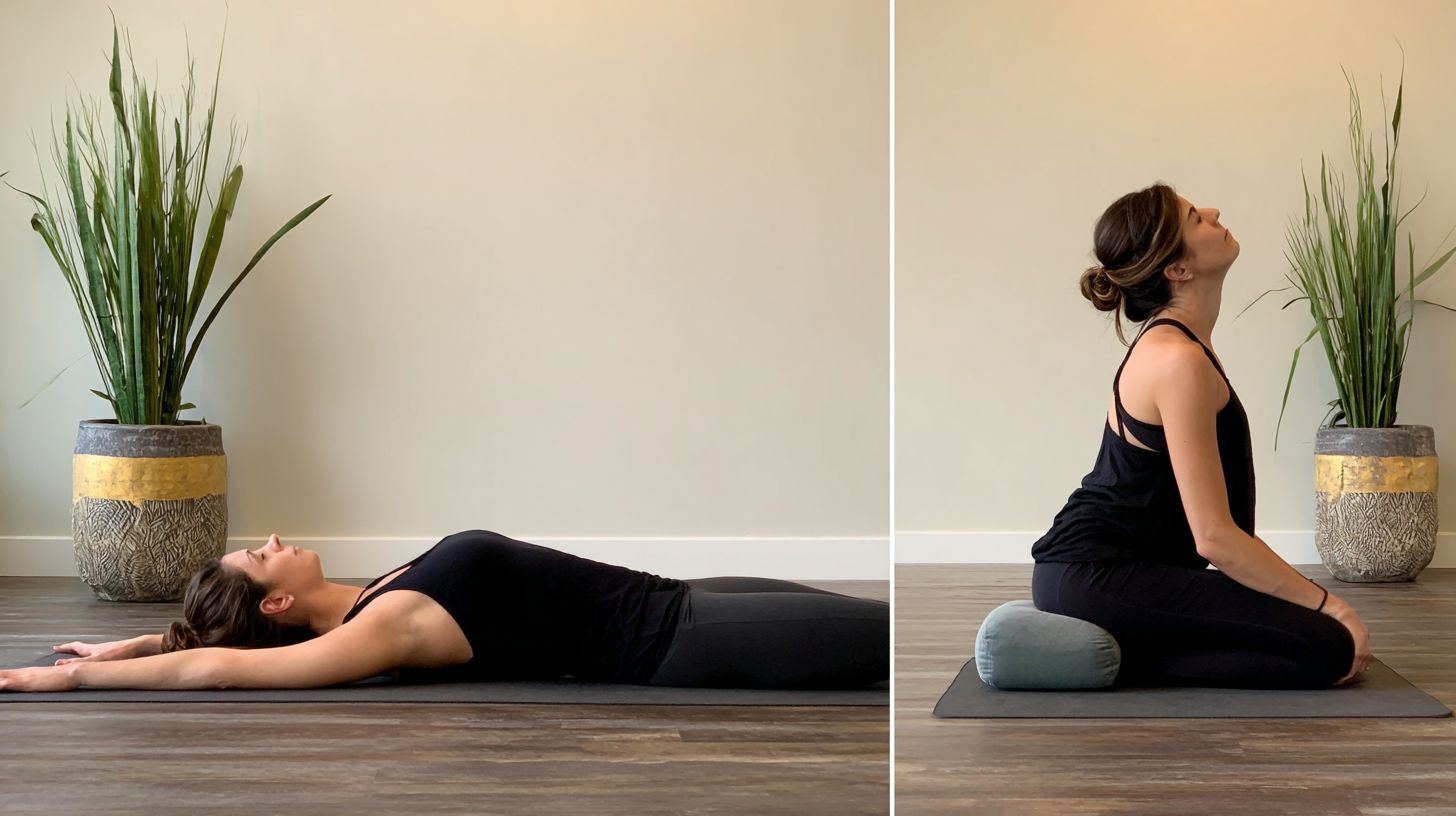
Both Restorative Yoga and Yin Yoga support spinal health for bone metastasis survivors, but differ in loading patterns. Restorative Yoga uses extensive props like bolsters, blocks, and blankets to create zero-gravity support, minimizing any spinal stress. This approach aligns with principles from B.K.S. Iyengar, emphasizing asanas that promote deep relaxation without strain.
In contrast, Yin Yoga involves long held poses targeting connective tissues, fascia, ligaments, and tendons through mild sustained flexion or extension. Pioneered by Paul Grilley, author of Yin Yoga: Principles and Practice and Complete Guide to Yin Yoga, it follows the 80% rule of gentle passive stretching to avoid excess force. For bone metastasis patients, this requires careful screening to prevent risks from spinal lesions.
| Aspect | Restorative Yoga | Yin Yoga |
|---|---|---|
| Spinal Loading | Zero gravity support | Mild sustained flexion/extension |
| Osteoporosis Risk | Lowest | Moderate if modified |
| Bone Metastasis Safety | Safest baseline | Requires screening |
Restorative Yoga excels in parasympathetic nervous system activation, fostering mental calm and circulation without joint compression. Yin Yoga builds flexibility but demands modifications, such as shorter holds or prop support, to safeguard the spine in cancer survivors practicing complementary alternative medicine.
Modification Guidelines for Spinal Lesions
For survivors with spinal lesions, prioritize restorative yoga’s prop-heavy setup in poses like supported shavasana or child’s pose with bolsters. Avoid deep forward folds in yin yoga unless screened by a healthcare provider integrated into oncology care. These adjustments protect fragile bones while enhancing quality life through mindful breath and pranayama.
Key modifications include using blocks under the sacrum for supine twists in restorative practice, ensuring no spinal compression. In yin yoga, opt for reclined variations of dragon pose with blankets, limiting holds to gentle sensations that calm the monkey mind. Experts recommend starting with teacher-guided sessions to assess individual tolerance.
- Screen for lesion locations via imaging before any long held poses.
- Use props extensively to elevate and support the spine in all practices.
- Incorporate dhyana and breathwork to shift focus from stress to inner healing and atman.
- Monitor for pain signals, exiting poses immediately to prioritize safety.
These guidelines make both Hatha Yoga styles viable in integrative oncology, supporting immune system balance and nervous system calm per teachings in Yoga Sutras of Patanjali. Restorative Yoga offers the safest entry, while modified Yin Yoga can gradually introduce flexibility for overall body healing.
Safety Comparison: Joint Stress
Joint safety varies significantly between the passive support of restorative yoga and targeted stress of yin yoga. Restorative Yoga uses generous props like bolsters, blocks, and blankets to create fully supported asanas that promote deep relaxation without strain. This approach aligns with B.K.S. Iyengar‘s emphasis on alignment and safety, making it ideal for bone metastasis survivors cautious about joint integrity.
In contrast, yin yoga, influenced by Paul Grilley, involves long held poses that target connective tissues, fascia, ligaments, and tendons through passive stretching. While beneficial for flexibility, these poses can impose undue stress on vulnerable joints in cancer patients. Experts recommend prioritizing the parasympathetic nervous system activation in restorative practices for healing and mental calm.
| Joint | Restorative Approach | Yin Yoga Risk Level |
|---|---|---|
| Hips | Fully propped, neutral | High if hypermobile |
| Knees | Micro-bends only | Ligament stress risk |
| Shoulders | Gravity-released | Safe with props |
This table highlights key differences. For hips, restorative yoga maintains neutral positioning to avoid rotation strain, unlike yin’s deep hip openers that risk hypermobility issues. Knees benefit from micro-bends in restorative setups, preventing hyperextension common in yin’s prolonged folds.
Joint-Specific Modifications
Restorative Yoga excels with props for customization, ensuring joints remain stress-free during practice, as taught in programs like Arhanta Yoga. For hips, layer blankets under the pelvis in supported bridge pose to maintain alignment and enhance circulation without compression. This fosters mindfulness and breath awareness, or pranayama, vital for integrative oncology patients.
Knees demand gentle micro-bends; use bolsters behind knees in reclined poses to support ligaments while inviting shavasana-like relaxation. Shoulders release fully onto gravity in heart-opening setups, padded with blocks to prevent impingement. These modifications honor the body’s limits, promoting quality of life.
In yin yoga, apply the 80% rule by entering poses to 80% of capacity, but survivors should shorten holds or elevate joints with props to mitigate risk. Always prioritize calming the nervous system over aggressive flexibility gains, especially post-cancer treatment.
Clearance Protocols
Before any yoga practice, obtain medical clearance tailored to bone metastasis history from sources like the American Cancer Society and National Center for Complementary and Integrative Health (NCCIH), consulting oncologists versed in complementary alternative medicine. Discuss current bone density, pain levels, and metastasis sites to rule out fracture risks in weight-bearing asanas. This step ensures safety in both restorative and yin styles.
Monitor for warning signs like sharp pain, swelling, or numbness during sessions, pausing immediately to return to deep relaxation. Incorporate dhyana and gentle hatha yoga elements for immune system support and inner self connection, or atman. Sequence practices with shorter durations, building tolerance gradually.
Restorative Yoga‘s emphasis on props and minimal effort, as outlined in Relax and Renew by Judith Hanson Lasater, makes it the safer gateway for beginners in clinical trials exploring yoga’s role in patient recovery, echoing Viktor Frankl’s resilience philosophy. Track progress through journals noting joint comfort and monkey mind reduction, adjusting as healing progresses.
Risk Factors for Metastasis Survivors
Survivors of bone metastasis face specific vulnerabilities that require tailored movement practices from studios like Zoi Yoga Italy. Treatment-induced osteopenia weakens bone density, raising fracture risks during yoga poses. Pain-avoidance posture patterns further compromise spinal alignment and joint stability.
Medication side effects often impair balance, making certain asanas hazardous for these patients. Restorative yoga emphasizes props like bolsters and blankets for full support, minimizing strain on fragile bones. In contrast, yin yoga’s long held poses target connective tissues but demand caution to avoid excessive pressure.
Integrative oncology views yoga as complementary alternative medicine to enhance quality of life. Experts recommend prioritizing deep relaxation over aggressive flexibility to nurture the parasympathetic nervous system. This approach supports healing while respecting the body’s limits in cancer survivors.
Pain signals and fatigue serve as critical guides in practice. By linking these risk factors to yoga contraindications, survivors can safely explore hatha yoga elements like pranayama for mental calm and circulation. Paul Grilley and BKS Iyengar influences underscore prop usage for safe participation.
Fracture Prevention Considerations
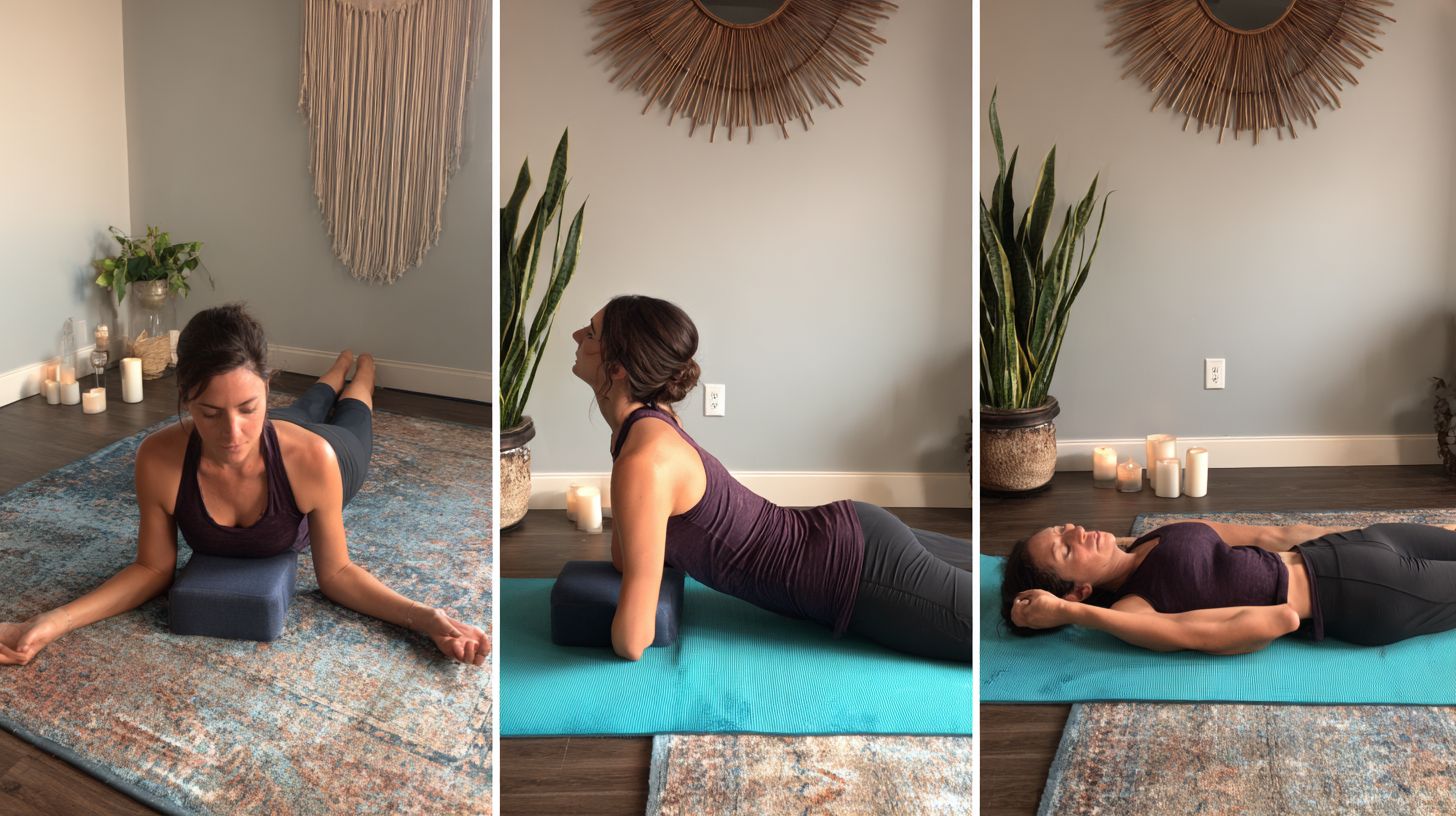
Fracture prevention demands meticulous strategies for bone metastasis survivors in yoga. Obtain medical clearance for weight-bearing activities before starting any practice to assess bone health. This ensures poses align with individual tolerances in restorative or yin yoga.
Use props for 100% spinal support, such as bolsters, blocks, and blankets, mirroring Iyengar yoga principles. These tools promote passive stretching without compressing vertebrae, ideal for addressing treatment-induced osteopenia. Limit yin holds to 2 minutes initially to gently engage fascia, ligaments, and tendons.
Avoid forward flexion beyond 20 degrees of spinal movement to safeguard metastatic sites, favoring restorative yoga’s calming, supported variations. Monitor pain signals immediately, ceasing practice at the first sign of discomfort to protect joints and enhance mindfulness. Follow the 80% rule for effort, preventing overload on the nervous system.
- Red flags include sharp pain, numbness, dizziness, or swelling, requiring instant cessation and medical consultation.
- Persistent fatigue or breathlessness signals overexertion, prompting shorter sessions with shavasana emphasis.
- Any unintended joint popping or instability warrants pausing yin yoga’s deeper holds for restorative alternatives.
Clinical Evidence and Studies
Growing research from National Center for Complementary and Integrative Health (NCCIH) and PubMed supports yoga’s role in integrative oncology for cancer patients. The NCCIH yoga fact sheets highlight its value as a complementary practice for symptom relief in survivors. These resources emphasize Hatha Yoga styles, including restorative and yin approaches, for gentle support, rooted in ancient texts like Charak Samhita and Susruta Samhita.
American Cancer Society and National Center for Complementary and Integrative Health (NCCIH) endorsements affirm yoga for managing fatigue and pain in breast cancer survivors with bone metastasis. Related insight: our guide on what are the best ways to manage treatment-related fatigue explores this alongside other effective strategies. This aligns with findings from a study published in Psychotherapy and Psychosomatics, which suggests yoga improves psychological and spiritual outcomes. PubMed reviews on yoga practices, including insights from ancient texts like the Yoga Sutras of Patanjali, note improvements in quality of life through pranayama and asanas. Consensus findings, inspired by the resilience principles in Viktor Frankl’s philosophy, point to enhanced mental calm and reduced stress without aggressive exertion.
Clinical trials in integrative oncology explore restorative yoga and yin yoga for their calming effects on the parasympathetic nervous system. Patients report better circulation and joint mobility using props like bolsters and blankets. Experts recommend these for bone metastasis survivors seeking deep relaxation and fascia release.
Studies underscore yoga’s alignment with dhyana and mindfulness to foster healing of the inner self. Long-held poses in Yin Yoga, inspired by Paul Grilley and detailed in his book Yin Yoga: Principles and Practice, target ligaments and tendons passively. Restorative Yoga, rooted in B.K.S. Iyengar methods, prioritizes the 80% rule for effortless stretching and shavasana integration.
Expert Recommendations
Leading teachers like Paul Grilley and Judith Hanson Lasater offer cautious guidance for medical populations. Grilley advises to find your edge but don’t cross it, emphasizing safety in yin yoga where long held poses target connective tissues like fascia, ligaments, and tendons. This principle protects fragile bones in bone metastasis survivors.
Lasater promotes support before stretch in restorative yoga, using props such as bolsters, blocks, and blankets to foster deep relaxation without strain. Her approach activates the parasympathetic nervous system, promoting healing and mental calm. Survivors benefit from this gentle path to the inner self.
Oncologist-yogi collaborations, including those from programs like Arhanta Yoga and Zoi Yoga Italy, often recommend Restorative Yoga as the primary practice for cancer patients. Yin yoga enters the picture only post-clearance, when joints and circulation stabilize. Experts favor restorative’s passive stretching and breath focus for integrative oncology, contrasting with more dynamic styles like Hatha Yoga or Ashtanga Yoga.
Practical advice includes starting with shavasana supported by props, incorporating pranayama for stress reduction, and observing the 80% rule of gentle effort. These methods enhance quality of life, mindfulness, and immune system support in complementary alternative medicine.
Practical Guidelines for Practice
Safe practice combines medical oversight with modified restorative sequences for bone metastasis survivors. These guidelines prioritize Restorative Yoga over yin yoga due to its gentler approach, as outlined in Judith Hanson Lasater’s Relax and Renew, avoiding strain on fragile bones while promoting deep relaxation. Always consult oncologists before starting to ensure alignment with integrative oncology protocols.
A 20-minute sample sequence offers an accessible entry point, emphasizing props like bolsters, blocks, and blankets for full support. This sequence fosters parasympathetic nervous system activation, aiding stress reduction and circulation without passive stretching of connective tissues. Practice in a quiet space to cultivate mindfulness and mental calm.
Begin with 5-minute breath awareness, or pranayama, seated or reclined to settle the monkey mind. Transition to Supported Recline for 8 minutes using bolsters under knees and blankets for comfort, encouraging surrender. Follow with Legs-Up-Wall for 7 minutes to enhance circulation and joint relief, then end in Shavasana for 5 minutes to integrate healing.
Weekly progression builds tolerance gradually: start with two sessions, advancing to three as comfort allows, always under teacher supervision. Certified instructors trained in yoga for cancer patients ensure proper prop alignment, drawing from ancient medical perspectives in texts like the Charak Samhita and Susruta Samhita, as well as modern traditions like BKS Iyengar and Paul Grilley. Home practice checklists reinforce safety, listing prop checks, pain monitoring, and breath focus.
Weekly Progression Plan
Progression in restorative yoga honors the body’s healing pace for bone metastasis survivors, differing from yin yoga’s long held poses that target fascia, ligaments, and tendons. Week one focuses on the 20-minute sequence twice weekly, monitoring for any discomfort. Increase to three sessions by week three, incorporating subtle variations like bolster height adjustments.
Experts recommend the 80% rule: hold poses at 80% comfort to avoid overexertion, promoting flexibility and quality of life. Integrate Hatha Yoga elements such as gentle asanas with dhyana for inner self connection, or atman. This supports the immune system through calming practices in complementary alternative medicine.
By week four, add a brief legs-up-wall extension if stable, always prioritizing teacher supervision for initial sessions. Track sessions in a journal noting breath quality and relaxation depth. This structured approach enhances circulation and nervous system balance without risking bone stress.
Teacher Supervision Requirements
Teacher supervision is essential for bone metastasis survivors, ensuring poses remain fully supported and free from compression on metastatic sites. Instructors versed in Iyengar yoga excel at prop modifications, preventing the deeper passive stretching of yin yoga. Sessions should occur in specialized classes for cancer patients, blending restorative yoga with clinical awareness.
Seek teachers experienced in integrative oncology, who understand how practices influence the parasympathetic nervous system and stress response. They guide prop placement for bolsters and blankets, fostering safety in deep relaxation. Supervision minimizes risks, allowing focus on mindfulness and healing.
Initial practices demand one-on-one attention to assess individual needs, transitioning to group settings only after proficiency. Teachers monitor for signs of strain, adjusting for optimal pranayama and shavasana. This oversight elevates yoga from exercise to therapeutic tool.
Home Practice Checklists

Use a home practice checklist to maintain safety in restorative sequences, crucial for unsupervised sessions post-supervision. Verify all props are accessible: bolsters, blocks, blankets for every pose. Confirm a non-slip surface and ambient temperature suits relaxation.
- Assess bone pain levels pre-practice; skip if elevated.
- Position props to fully support body weight, avoiding pressure points.
- Focus on smooth breath awareness, pausing if mind wanders.
- Limit to 20 minutes, exiting poses slowly if discomfort arises.
- Journal post-practice: note relaxation depth and any alerts for medical team.
This checklist embodies mindful preparation, aligning home yoga with professional guidance for sustained benefits in quality of life and emotional resilience. Regular use reinforces habits of calm and self-care.
Frequently Asked Questions
Restorative Yoga vs. Yin Yoga: Which is Safer for Bone Metastasis Survivors?
Restorative Yoga is generally safer for bone metastasis survivors compared to Yin Yoga. Restorative Yoga uses props like bolsters and blankets to fully support the body in passive poses, minimizing strain on fragile bones and reducing fracture risk. Yin Yoga involves longer-held, deeper stretches that can compress or stress metastatic bone sites, potentially increasing injury risk. Always consult a healthcare provider before starting.
What Makes Restorative Yoga Safer Than Yin Yoga for Bone Metastasis Survivors?
Restorative Yoga emphasizes complete relaxation with gravity and props doing the work, avoiding any active muscle engagement or joint compression-key concerns for bone metastasis survivors prone to fractures. Yin Yoga’s prolonged, intense holds on connective tissues can inadvertently load weakened bones, making it riskier without modifications.
Restorative Yoga vs. Yin Yoga: Which is Safer for Bone Metastasis Survivors with Spinal Involvement?
For those with spinal bone metastasis, Restorative Yoga is safer due to its gentle, supported reclined or supine poses that avoid forward folds or twists common in Yin Yoga. These Yin elements could exacerbate spinal instability, whereas restorative setups promote alignment without pressure.
Can Yin Yoga Be Adapted to Be as Safe as Restorative Yoga for Bone Metastasis Survivors?
Yin Yoga can be heavily modified (e.g., shorter holds, more props, avoiding deep targets) to approach Restorative Yoga’s safety level for bone metastasis survivors, but it still carries higher inherent risk due to its stretching nature. Restorative Yoga requires fewer adaptations and is inherently low-impact.
Restorative Yoga vs. Yin Yoga: Which is Safer for Bone Metastasis Survivors During Chemotherapy?
Restorative Yoga is safer during chemotherapy for bone metastasis survivors, as it supports energy restoration without the physical demands of Yin Yoga’s deep holds, which might worsen fatigue or bone stress amid treatment side effects like weakened tissues.
How Do Restorative Yoga and Yin Yoga Differ in Safety for Bone Metastasis Survivors Post-Radiation?
Post-radiation, Restorative Yoga is safer for bone metastasis survivors because it avoids the sustained pressure of Yin Yoga poses, which could irritate radiated bone sites prone to brittleness. Restorative focuses on gentle nervous system calming with zero bone loading.